

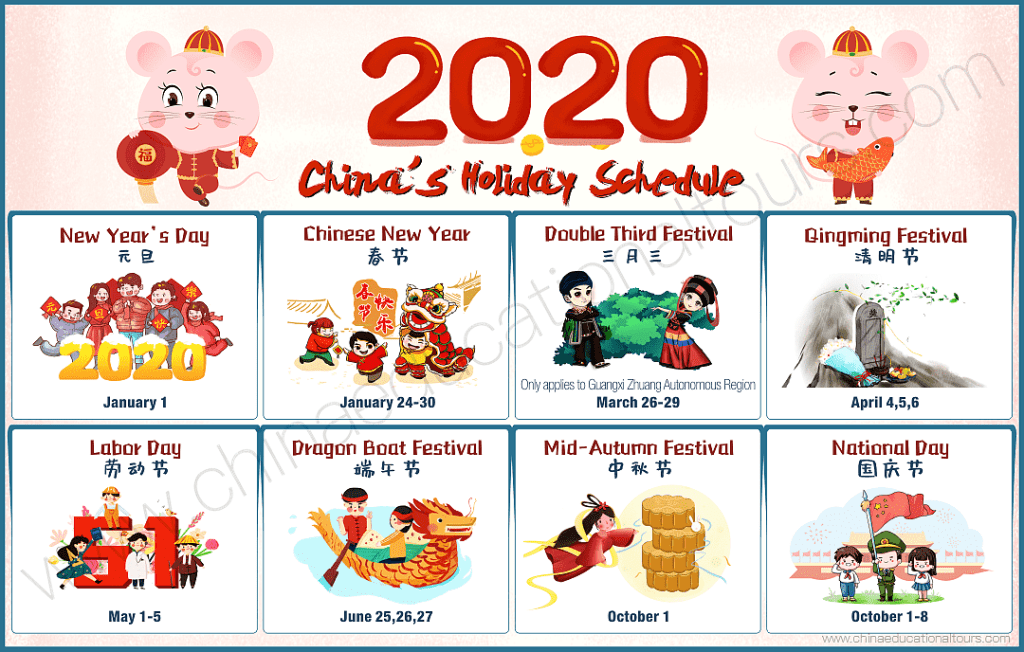
On June 25th, China will celebrate 端午節 (duān wǔ jíe) also known as “the Dragon Boat Festival”. It is a very popular commemoration, the opportunity to take a few days off and of course… to eat!
The origin of this festival takes us back to the 4th century BC. Qu Yuan 屈原, a poet and minister at the time, committed suicide in the Miluo River 汨罗 out of patriotism. Saddened by his death, the citizens of the village would then throw rice bowls wrapped in bamboo leaves (the famous Zongzi 粽子) in order to feed the fish of the river, and thus protect the corpse of the poet.
ZongZi 粽子
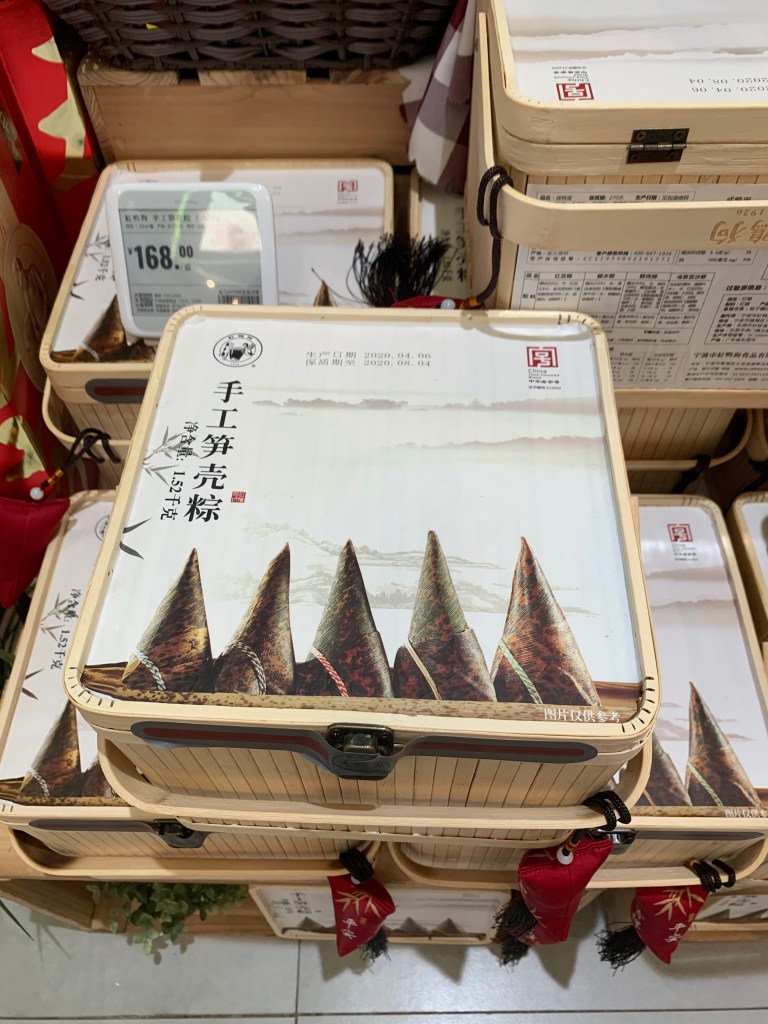
Traditional Chinese celebration inevitably means culinary speciality.
The Dragon Boat Festival, in this case, is an opportunity to refuel Zongzi: these delicious dumplings of sticky rice wrapped in bamboo leaves, in tetrahedral form.
What I particularly like about the Zongzi is the “grassy” smell that emerges during cooking and the multitude of stuffing available.
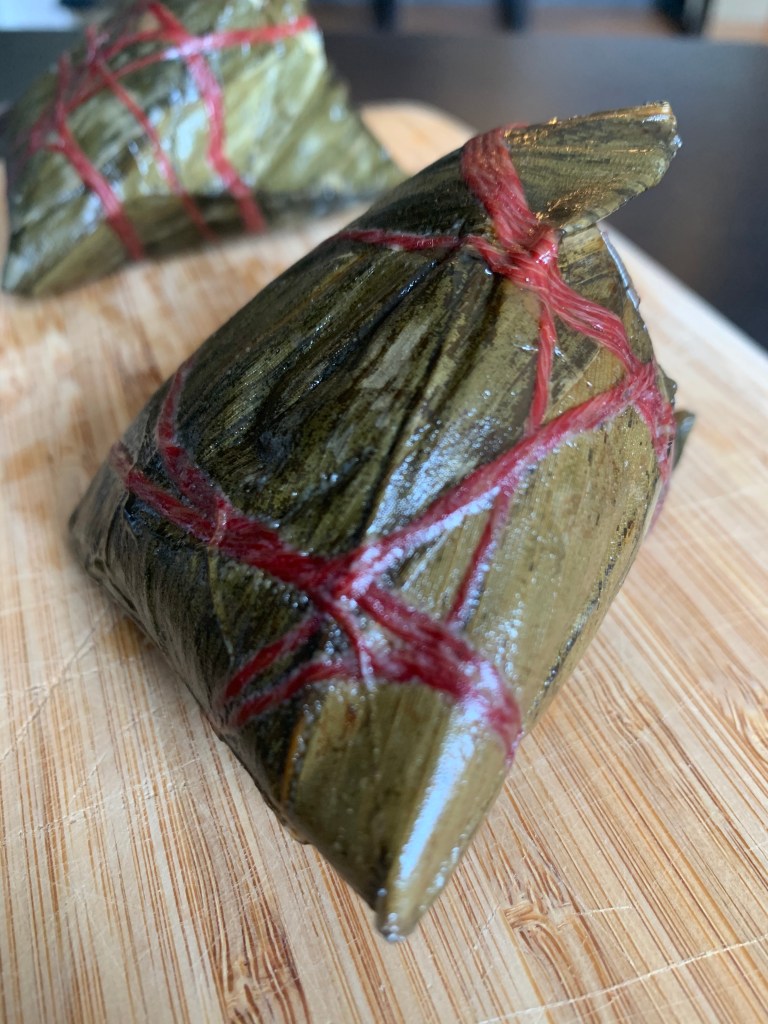
To be steamed or boiled, there are as many different Zongzi as there is provinces in China, and this article only talks about a few of it. The ingredients that compose Zongzi usually include one or several items from the following list:
Sticky rice
Bamboo leaves
Pork meat
Salted duck-egg yolk
Mushrooms
Dried shrimp
Lotus Seeds
Red beans
Dates
Their size and shape vary depending on the region of production, as well as the ingredients that make them up. They are usually consumed as a Staple food, for a quick lunch or sometimes a dessert. Here are some of the most common Zongzi that are consumed in China:
嘉兴粽子 – Jiaxing zongzi:
It is the most “common” Zongzi, also the most consumed one. Jiaxing is a city in Zhejiang province, not very far from where I live. 90% of the Zongzi sold in a supermarket in Ningbo are therefore Jiaxing Zongzi.
假粽 – Jia zong:
Instead of sticky rice, Mochi balls are used (made of glutinous rice flour). They are usually smaller than most zongzi and well sticky.
碱水粽 – Jianshui zong:
Usually eaten as a dessert. The sticky rice is treated with sodium carbonate which gives them a yellow colour. They usually contain no filling or are filled with a sweet mixture (e.g., sweet bean paste) and are often eaten with sugar or syrup.
广东粽 – Guangdong zong:
Smaller in size, Guangdong’s zongzi (from Guangdong Province) usually contain “Char Siu”, the famous Cantonese pork barbecue.
Tasting
I think it’s worth taking advantage of this period to try this traditional specialty. Obviously, you can buy Zongzi all year round but it’s a bit like eating a Christmas log in June, don’t you think?
The Supermarket Hema released a range of Zongzi which seemed very qualitative to me. My fear with the Zongzi is always to end up with a big amount of rice, and very little stuffing. So I rated the zongzi according to several criteria that seem important to me: ratio stuffing / rice, and power of taste.
Jianxing Zongzi, Hema, 22,9 ¥ / 2
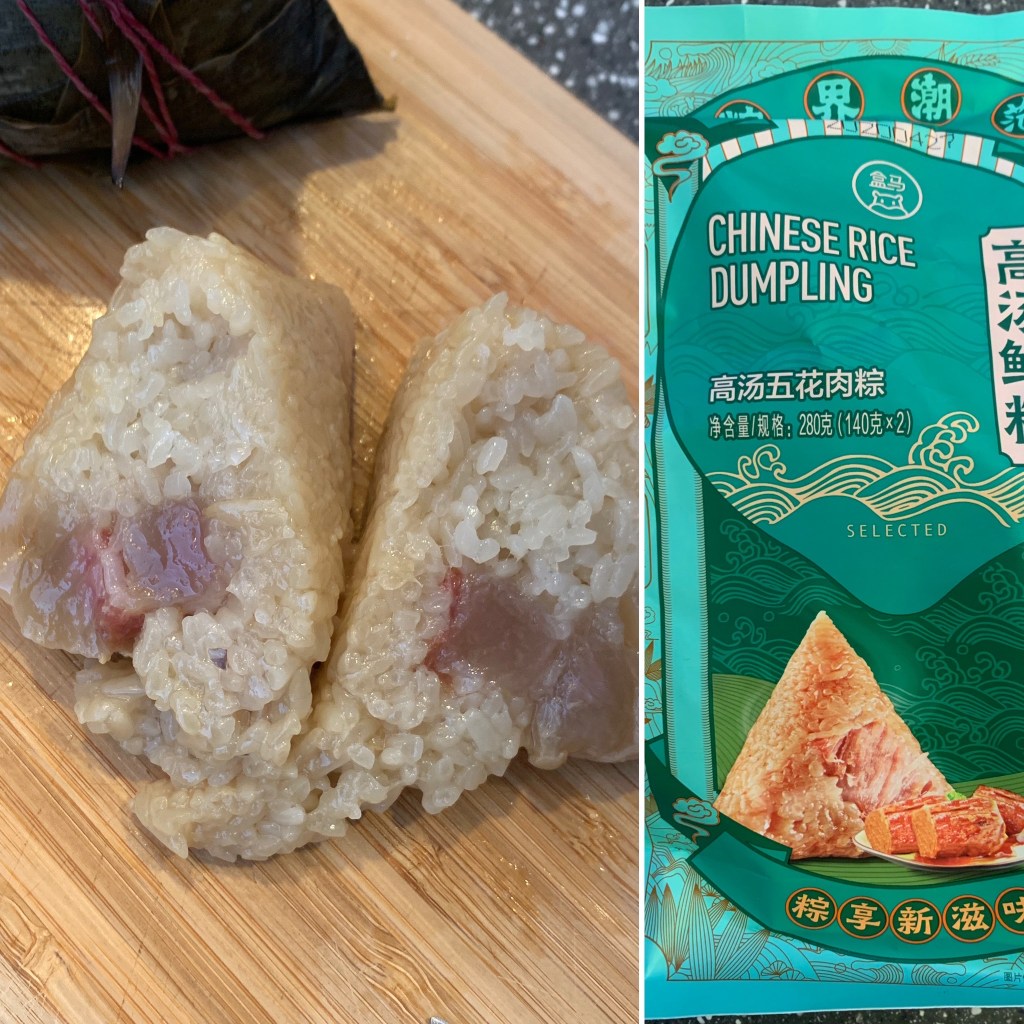
It is a very simple zongzi, consisting mainly of Dongbei sticky rice, salted pork and poultry broth. The chosen piece of meat is quite greasy, and a large part of the fat melts when cooked and disperses its aroma into the glutinous rice. It is a Zongzi that is boiled, spreading a pleasant vegetable smell in the room and in the rice.
Ratio stuffing/rice: 2/5 (not so filled)
Taste richness: 3/5 (quite rich)
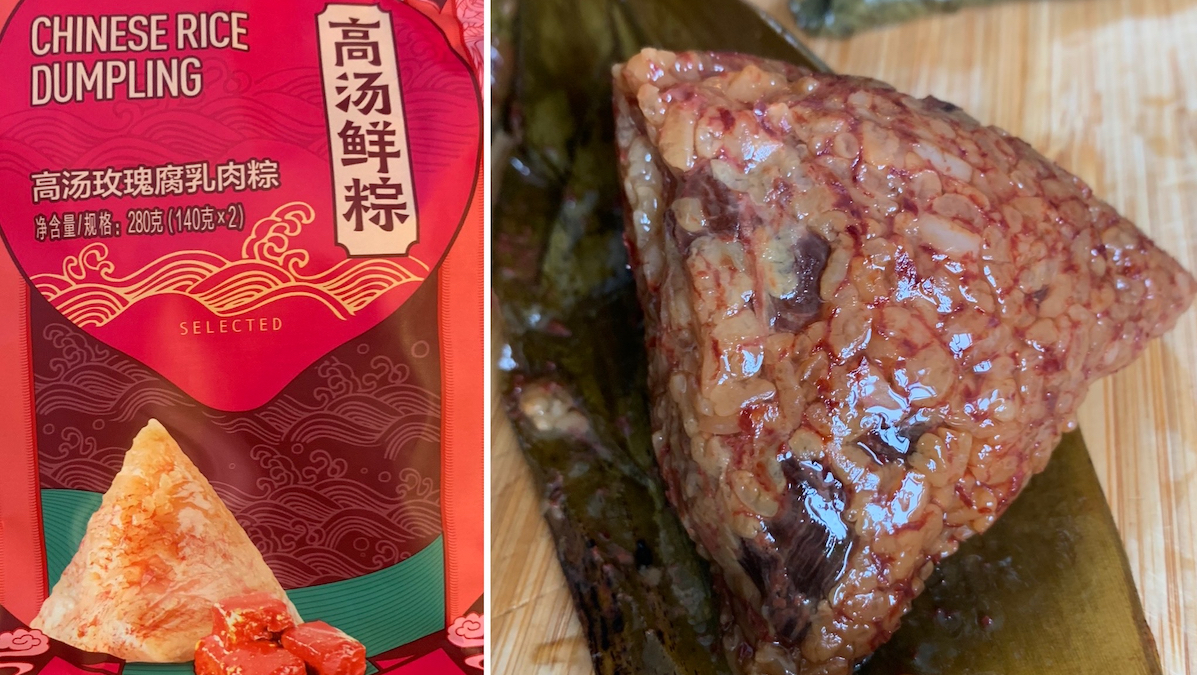
Furu et cochon, Hema 22,9/2
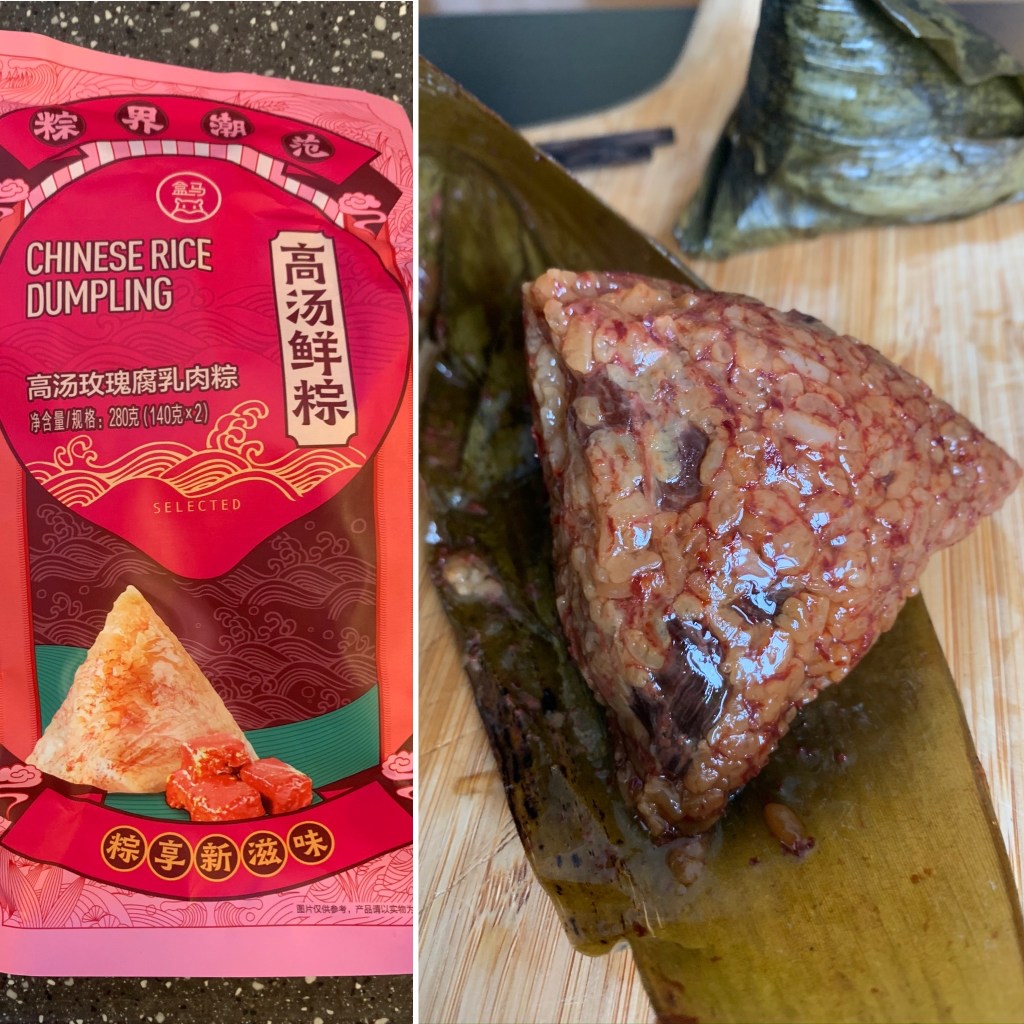
This version from Hema contains rice from 东北 DongBei (Noth-East China), pork belly, Furu (tofu fermented in alcohol) and chicken broth. It is a rich and tasty zongzi, quite powerful and very characteristic. The Furu gives off chocolatey notes. It’s a very rich and tasty one.
Ratio stuffing/rice: 4/5 (well-filled)
Taste richness: 5/5 (rich)
豆沙, 5¥/piece
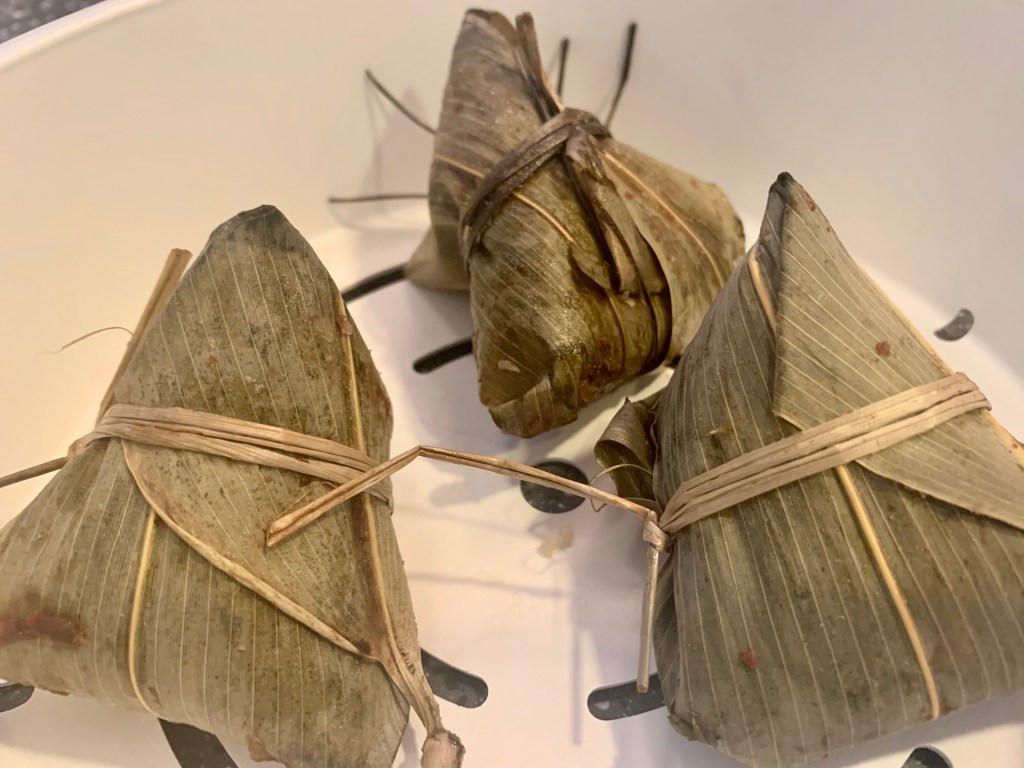
This is a zongzi from the Guangdong province (Canton, south of China). Their size is twice as small as those I find here in supermarkets. It is a sweet version, including a salted duck egg yolk, red bean, lotus seed paste and white sesame, all steamed.
The taste is generally quite bland to me. It’s a sweet version, but it has nothing of the pleasure I expect from a dessert in the sense that I hear it.
Ratio stuffing/rice: 3/5 (quite well-filled)
Taste richness: 1/5 (bland)
抱抱粽子蔡澜 – Bao Bao ZongZi by Chua Lam: Here we are on a more upscale version, made in collaboration with a well-known food critic in Hong Kong (Mr Lam). The brand has collaborated with this Hong Kong food critic to develop several recipes. I tested two:
叉烧粽-Char siu, 18 ¥/piece
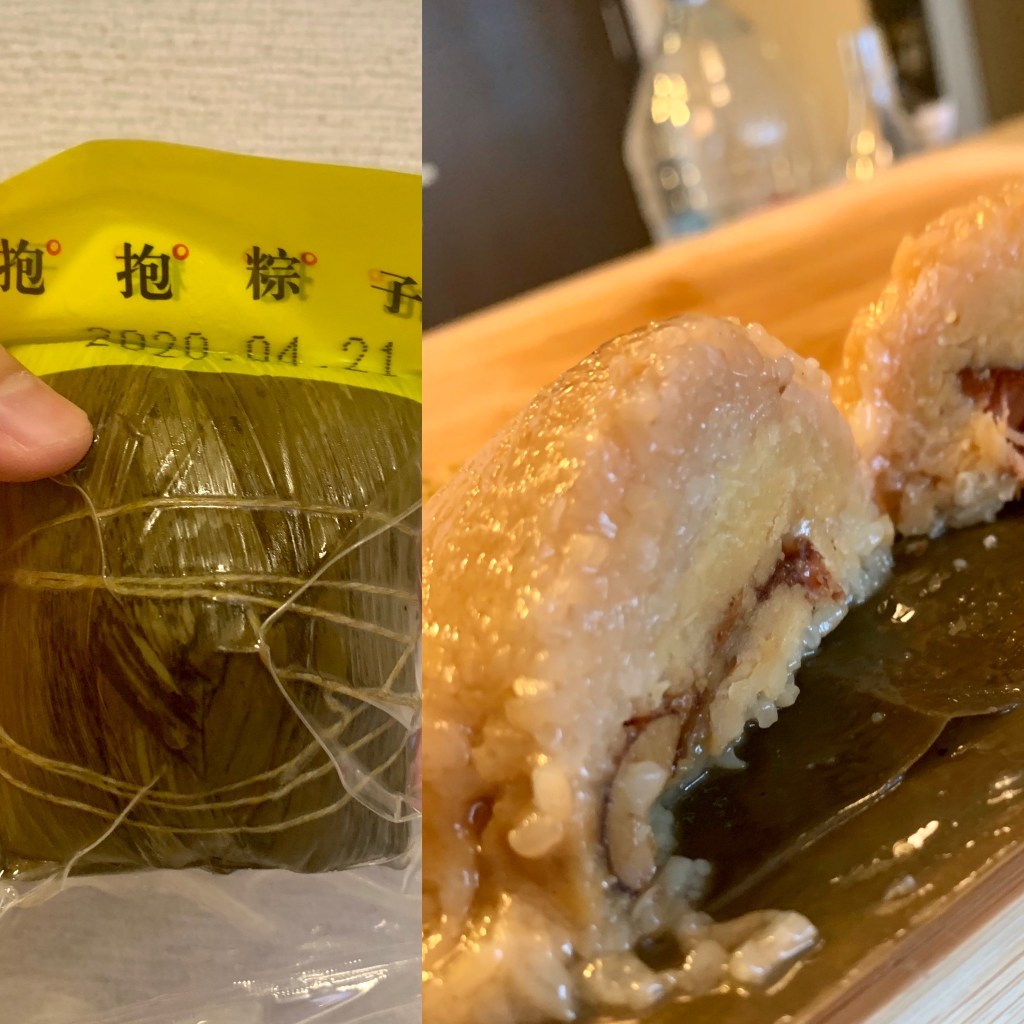
Garlic, soy sauce, duck egg yolk, lotus seed, green bean, 沙姜, Char siu Pork .. The result is rather pleasant, a good smell “grassy” emerges during cooking. The rice is very moist because it has cooked in boiling water. We have several different textures, the lotus seed brings an interesting crunch and an aftertaste of seed, walnuts. It’s a gourmet and complete version that I appreciate. The rice especially seems of very good quality: sticky, but you can feel the grains.
Ratio stuffing/rice: 3/5 ( quite filled)
Taste richness: 3/5 (quite rich)
红豆 – Hong Dou, 18¥/piece
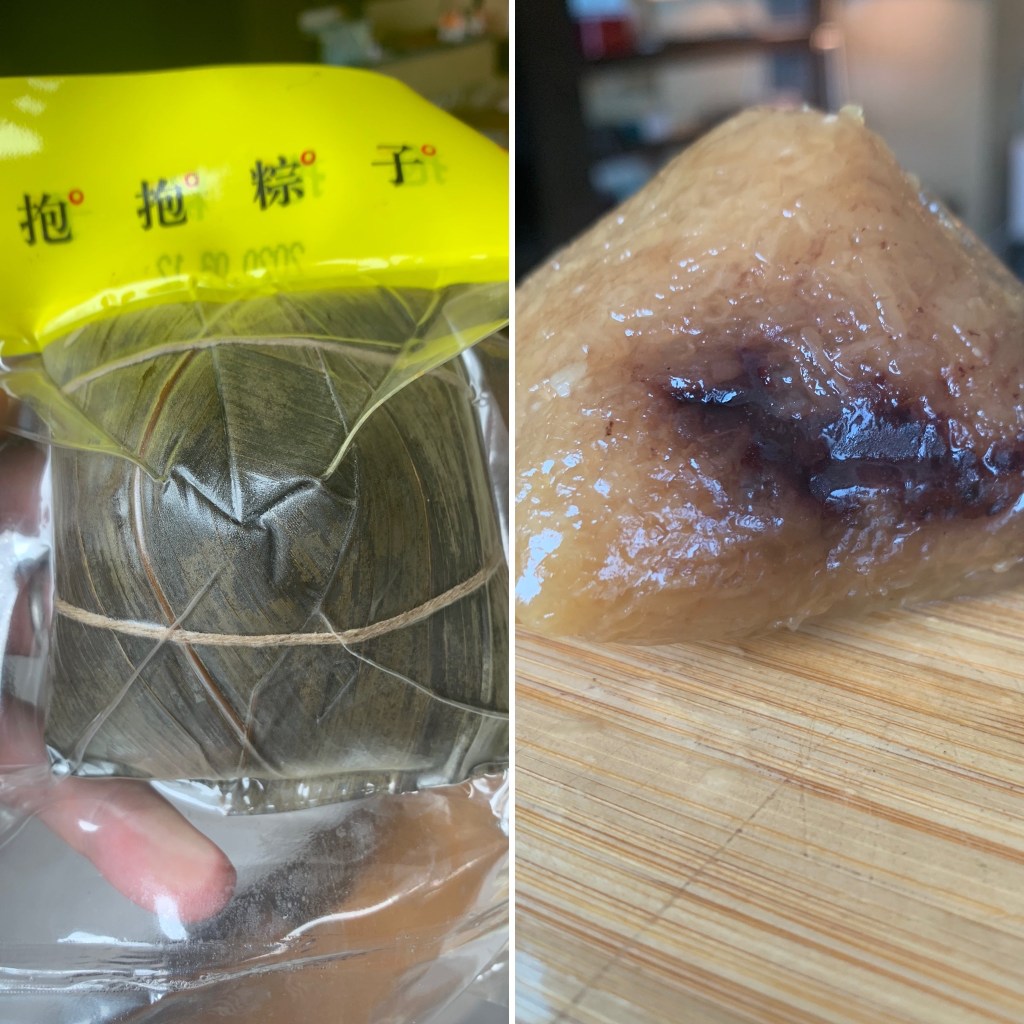
红豆 Hongdou (literally “red beans”) are extremely popular in Asia. They are used as stuffing in loaves of bread, as well as in drinks (Milk tea) and in sweet dishes. Generally, their taste a little bland leaves me with few impression. They are the equivalent of “Azuki” in Japan and especially famous in the “Dorayaki” (a kind of Japanese sweet made out of two pancakes stuffed with red bean puree).
In this case, The result is interesting. The rice used, again, is tasty and you can really feel the grains. It is also slightly sweetened and feels a bit like a rice pudding. The Red Beans are also qualitative and not too sweet which is a good sign.
Ratio stuffing/rice: 4/5 (well-filled)
Taste richness: 3/5 (quite rich)
Obviously, my heart globally tends to prefer the salty ones, compare to the sweet ones. Especially, the ones from eastern China tends to be richer, tastier, with the use of chicken broth to bring moisture in the dumpling.
That’s it for the Zongzi tour! Feel free to tell me how you like your Zongzi, and how are they commercialized where you live. I never had any out of China but I know you can find them everywhere.
Happy Dragon Boat Festival!
 monsieur baozi