
We don’t talk about it that much, but Shandong province really deserves to be visited.
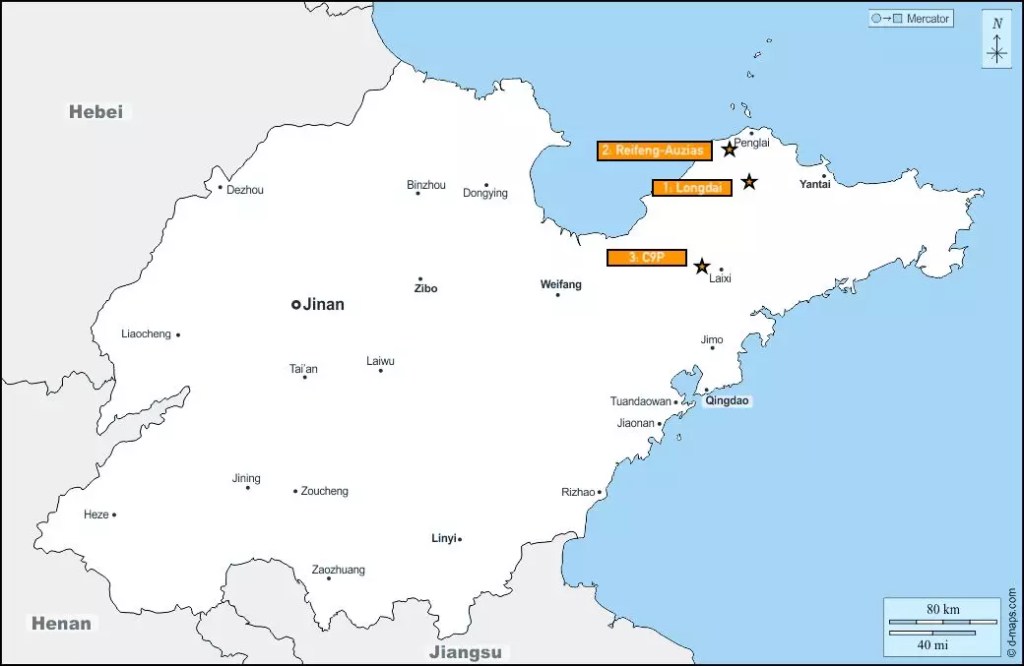
As a reminder: Shandong is the most important Chinese wine-producing area
China’s largest wine-producing region
Wine has been made there since the end of the 19th century
More than 140 wineries
Headquarters of Changyu (one of the biggest wine players in China)
Lafite Rothschild has chosen to set up its Chinese estate here (see my last article)
Will Shandong be dethroned by Ningxia?
This is not for me to say, but I think both regions have their share of advantages and disadvantages for vine growing.
Fundamentally different wines: that’s for sure.
Thanks to a cooler climate, Shandong’s wines are more comparable to what I am used to in France, whereas Ningxia’s profile would be more comparable to Spain or Argentina wines.
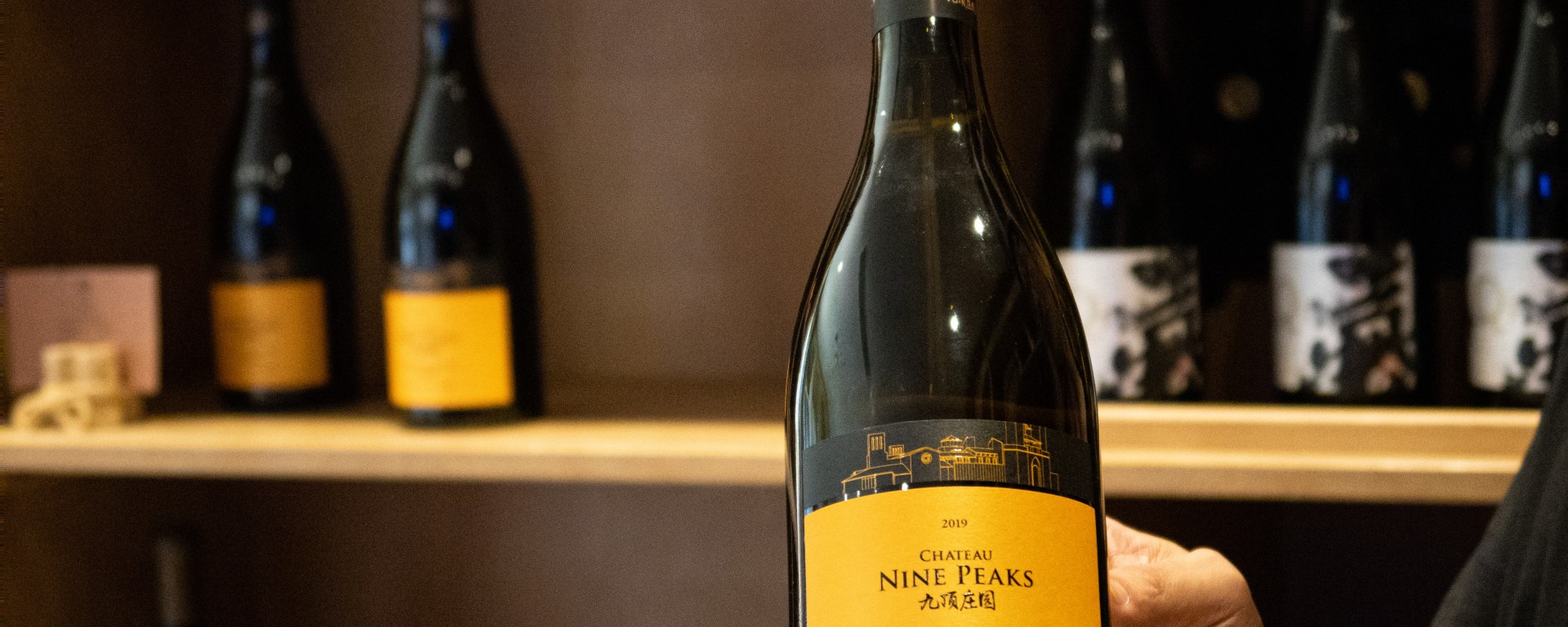
Chateau Nine Peaks (C9P)
九顶庄园
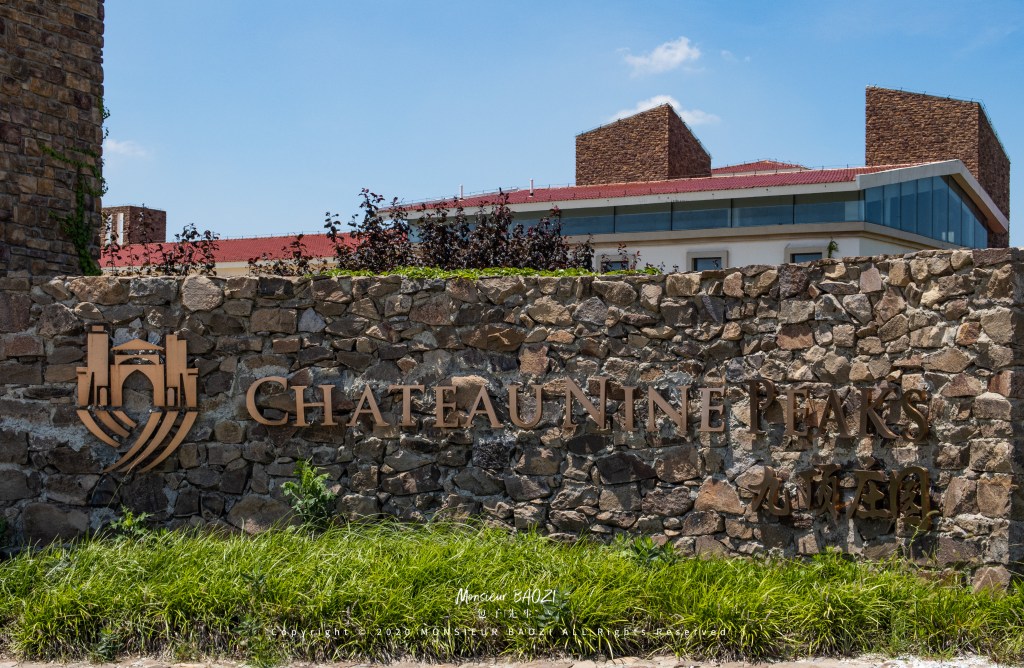
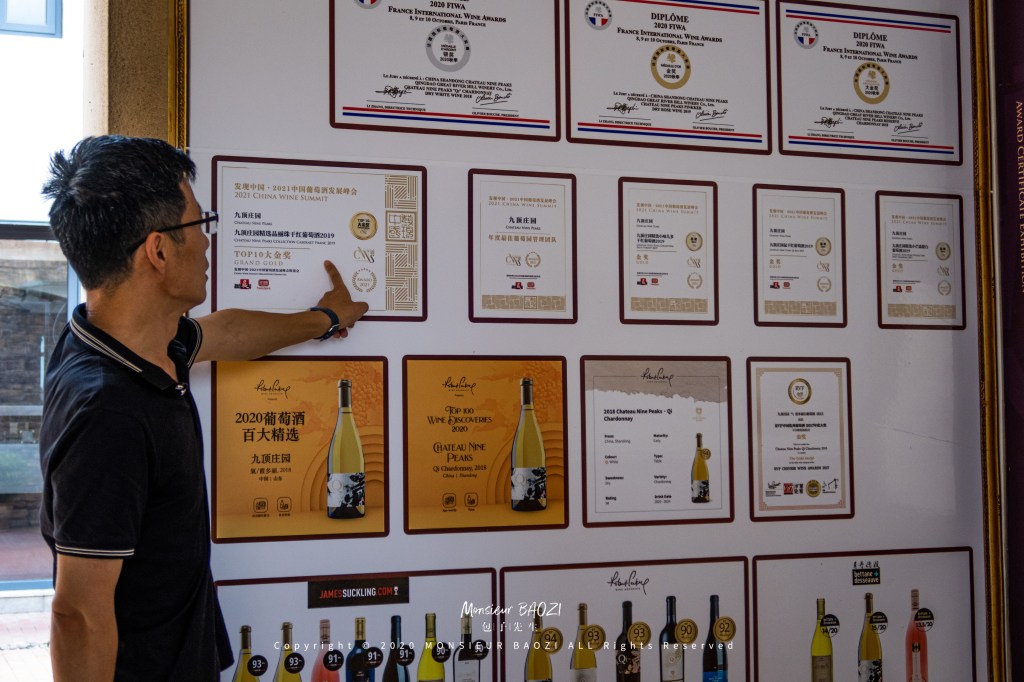
According to some wine critics, Chateau Nine Peaks is neither more nor less than the best winery in China.
According to others, its cuvée “Qi” Chardonnay would be the best white wine produced in China.
One thing is for sure: C9P stands out among Chinese fine-wine landscapes and left me with a great impression.
The winery
The winery is located near the city of Laixi, halfway between Yantai and Qingdao (~ 2 hours by car from each of the two cities)
When you arrive, it’s impossible not to be impressed by the quality of the construction.
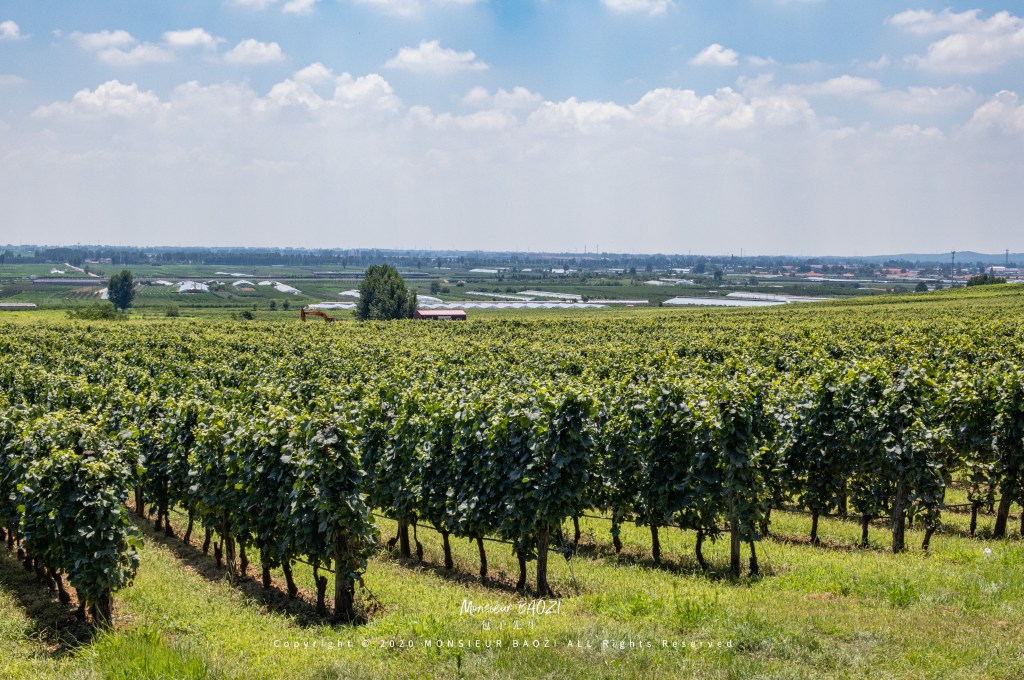
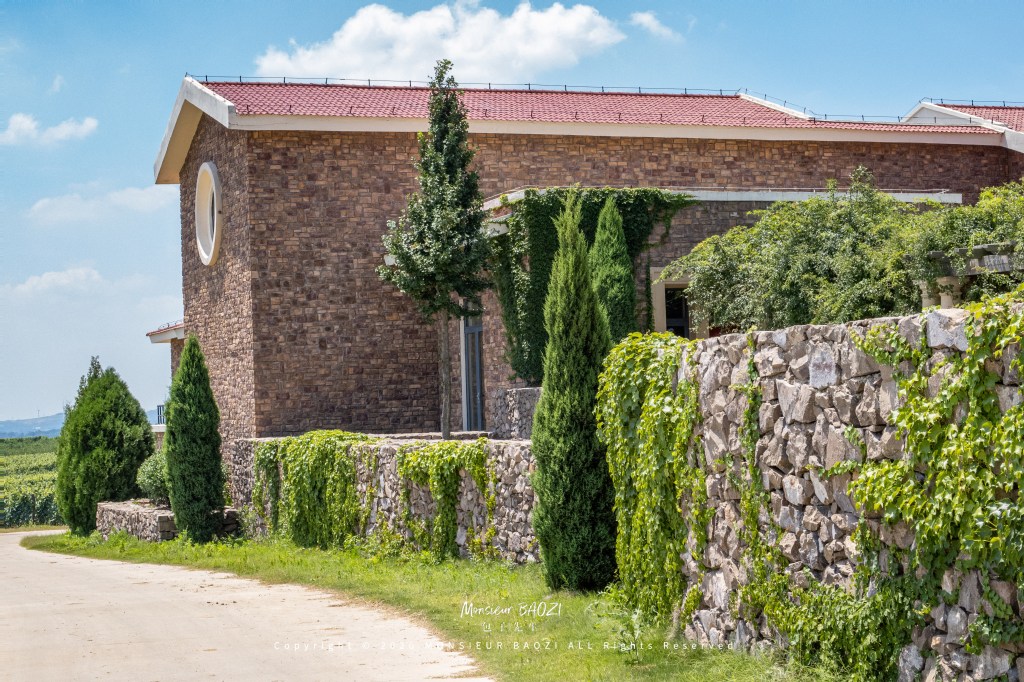
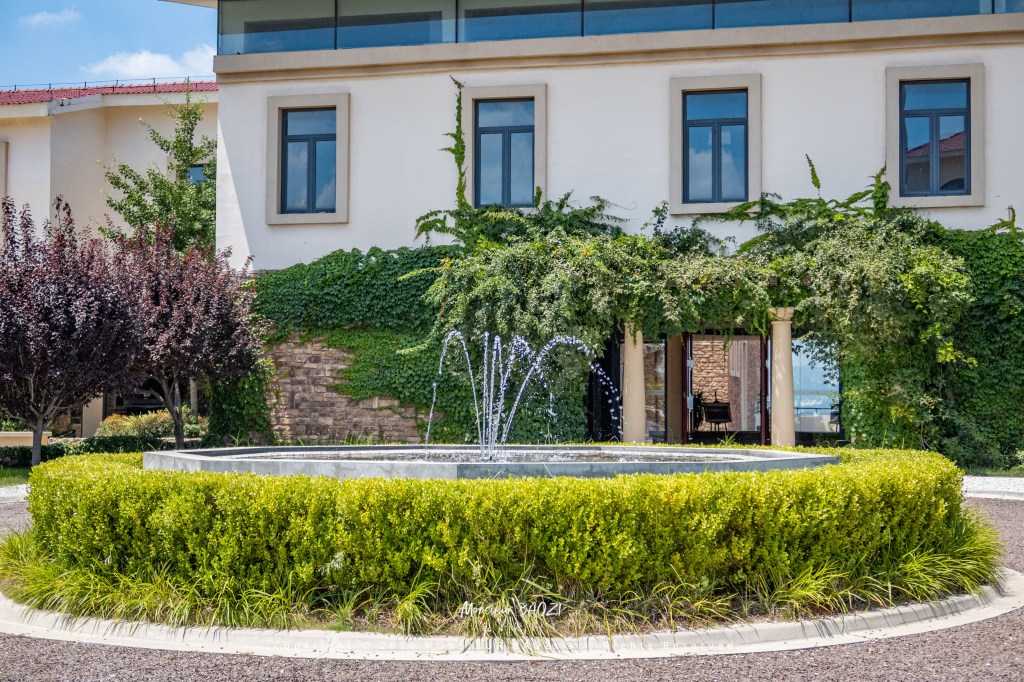
This is not a flamboyant estate, nor a kitsch chateau as we often see on the side of Shandong’s roads.
Here as soon as you set foot in the small courtyard, you are transported to a charming and poetic place.
If I had to describe the estate, I would compare it with a small bourgeois weekend residence, which one could find in the French countryside.
The building that borders the vineyards looks like it’s been here for ages, with ivy creeping up on its facade.
The visit
We were taken care of by Robin, who showed great professionalism.
The visit begins at level 1 with a brief history: Chateau Nine Peaks was founded in 2008 by the German Doctor Karl-Heinz Hauptmann.
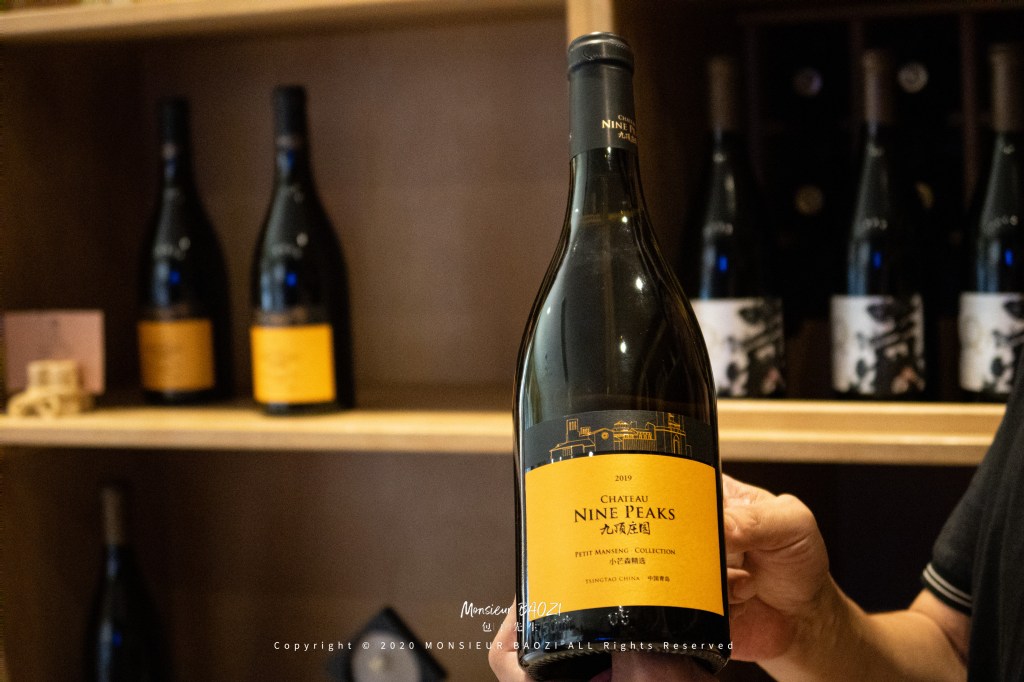
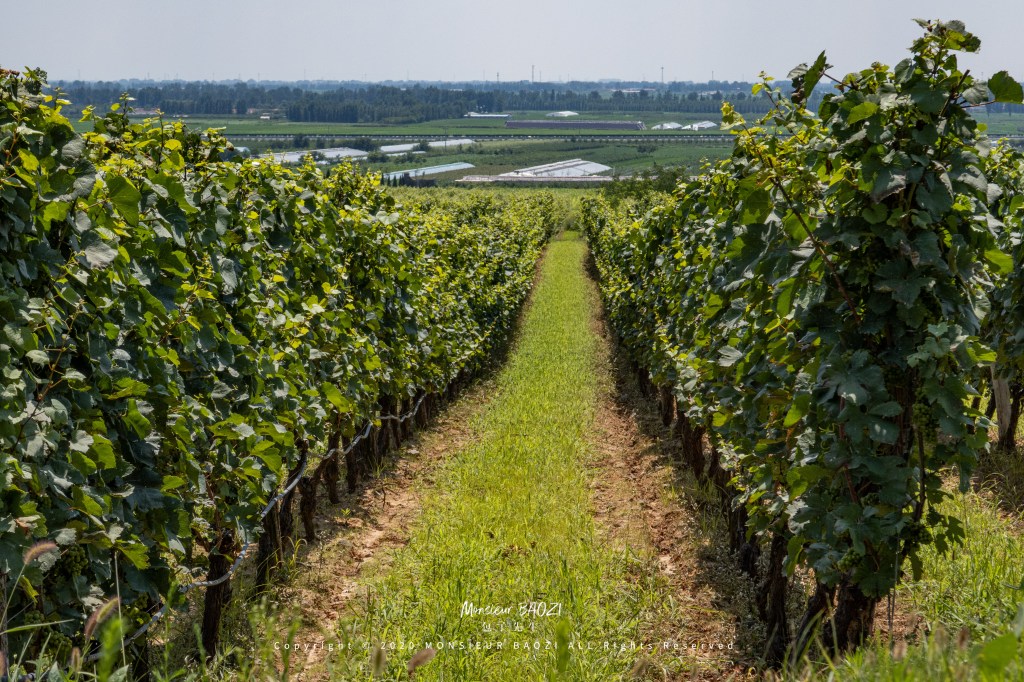
The winery has 150 hectares of vines that include many different grapes among which Cabernet Sauvignon, Cabernet Franc, Cabernet Gernischt (carmenère), Chardonnay, and Petit Maseng.
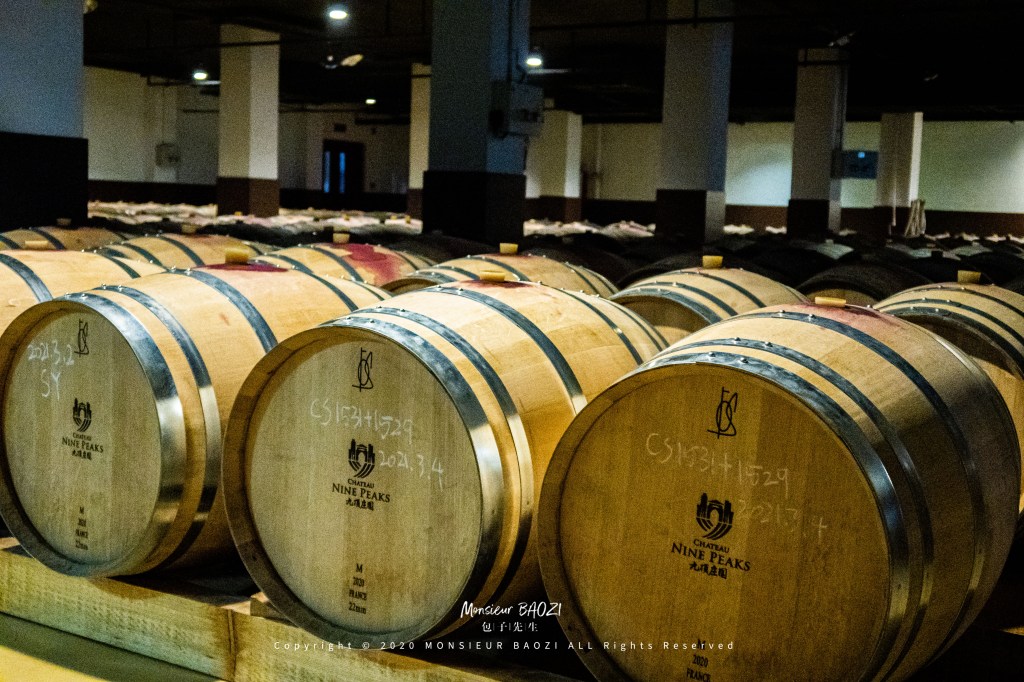
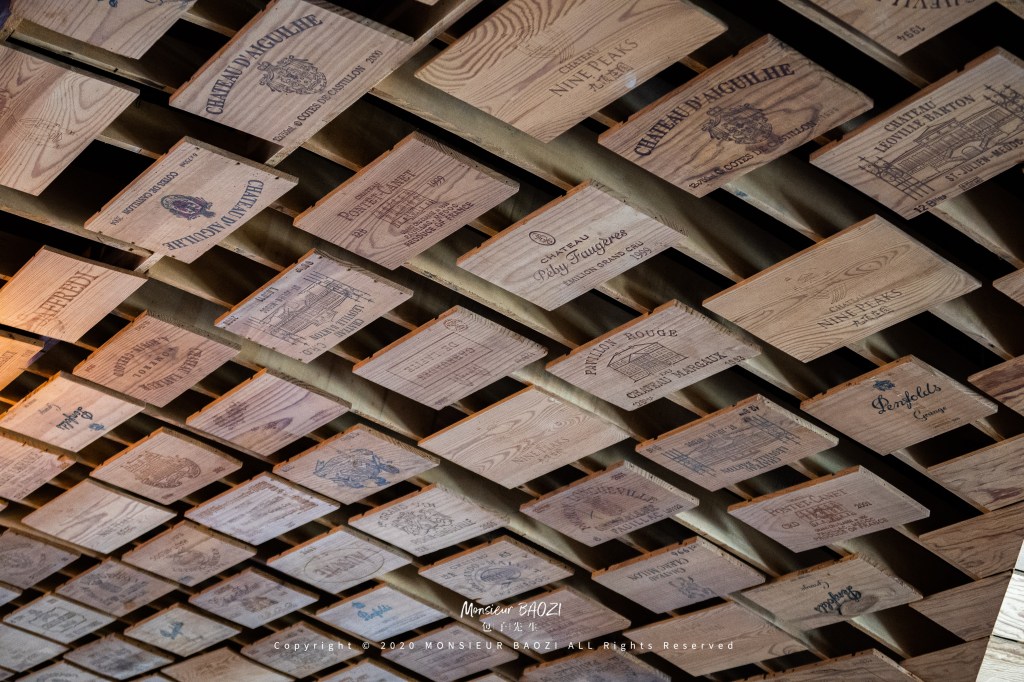
The visit continues to lvl -1, where the maceration vats are set up, then on level -2 to the impressive cellar.
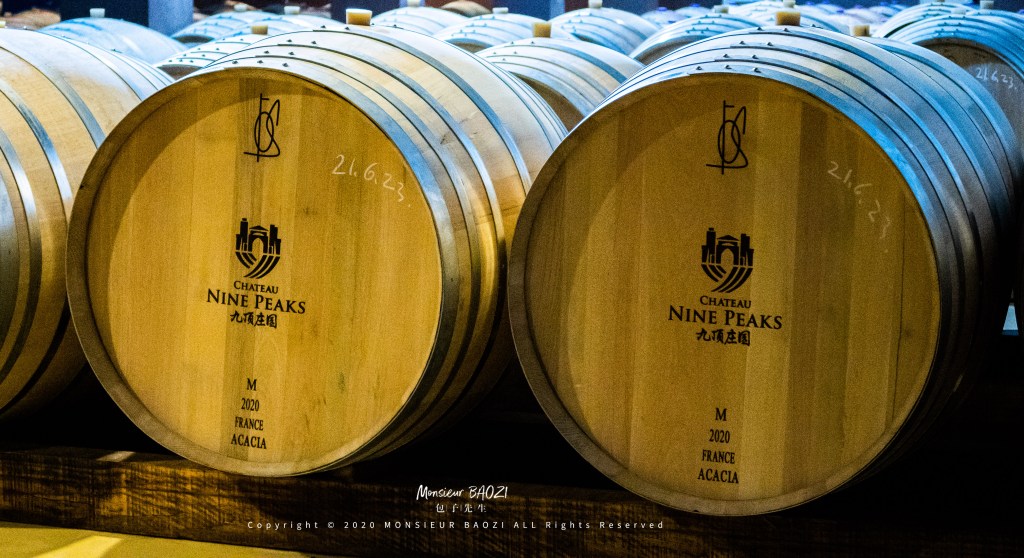
In the cellar, a temperature of around 15 degrees prevails which, Robin guarantees, is naturally maintained: the estate is built on an old cave, a considerable economic (and ecological !!) advantage.
A pleasant smell of oak hangs in the air, and the desire to taste the wines becomes insatiable.
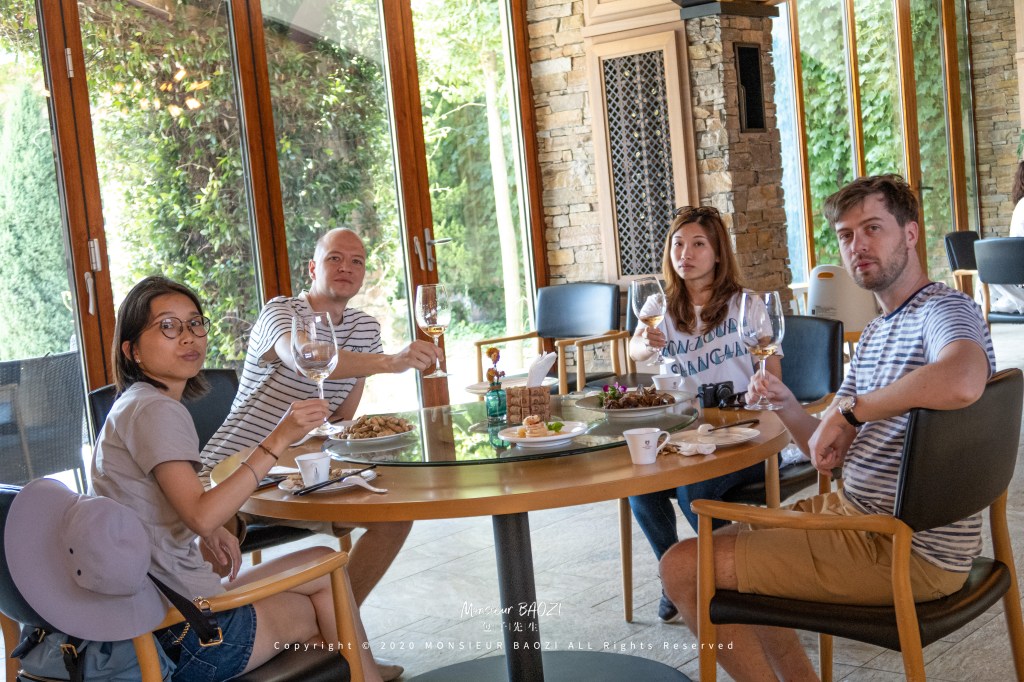
To finish: The best part of the visit is of course the tasting.
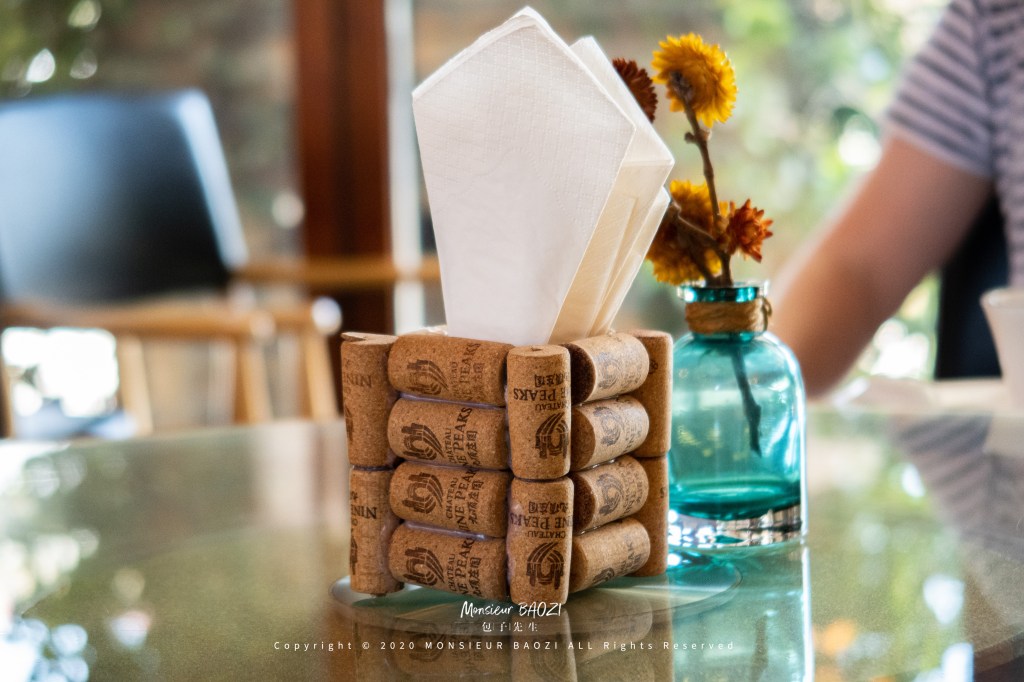
For this, Chateau Nine Peaks has a restaurant where a mix of dishes from here and elsewhere in China allows you to treat yourself by tasting the different vintages of the house.
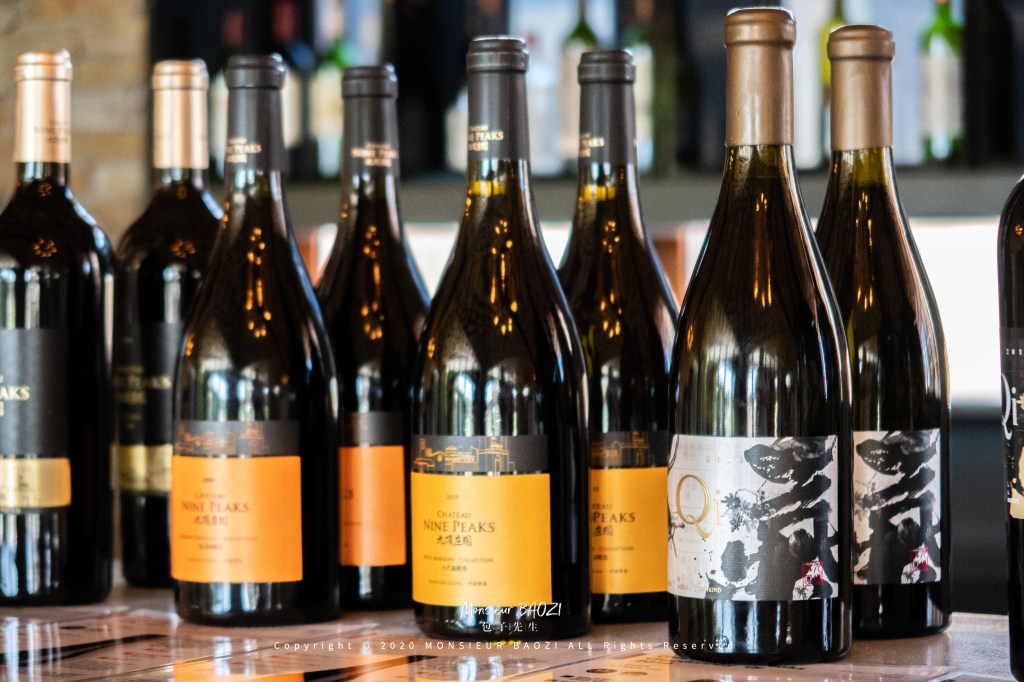
Bottle prices: order directly by the bottle, at a preferential price on site
Menu prices: several menus are available (it is preferable to order in advance). The first menu starts at ~ ¥200/pers
Tasting
Our choice fell on wines that were rather cool and easy to drink for a mid-summer lunch, as well as richer and more complex wines that I decided to bring back to Ningbo.
01/ Pinker rosé 2020 – 桃红葡萄酒
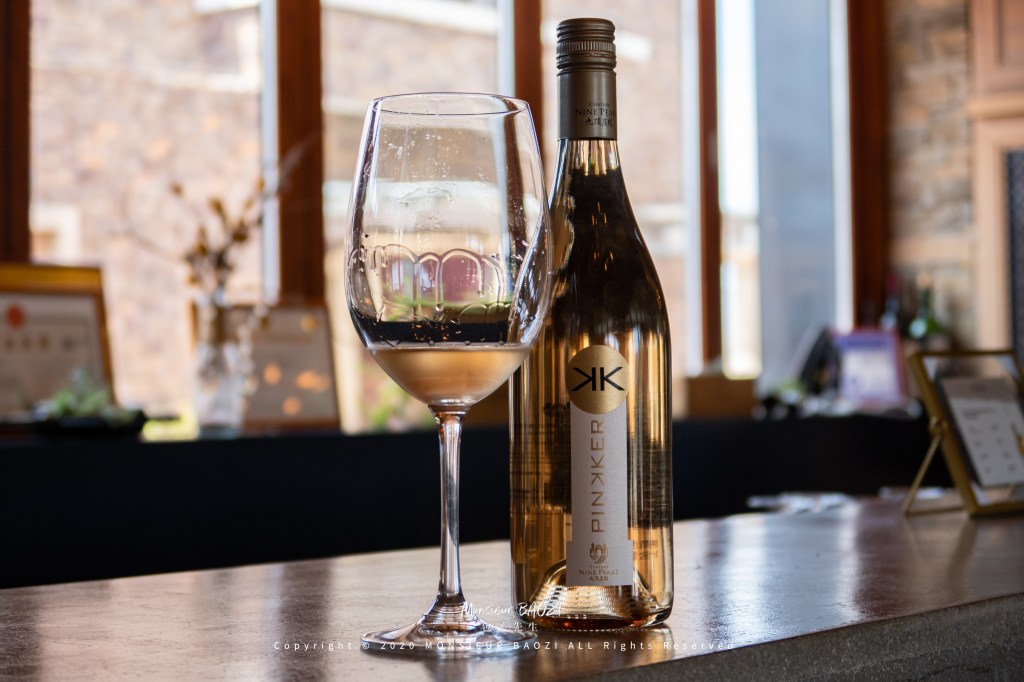
Grape varieties: Cabernet franc 57%, Syrah 43%
Price: ¥ 168 / bottle
The ultimate rosé summer: both fresh and lively, with a lingering length for such a young wine.
Pleasant notes of stone fruit and citrus.
02 / Chardonnay classic 2020 – 九顶庄园霞多丽白葡萄酒
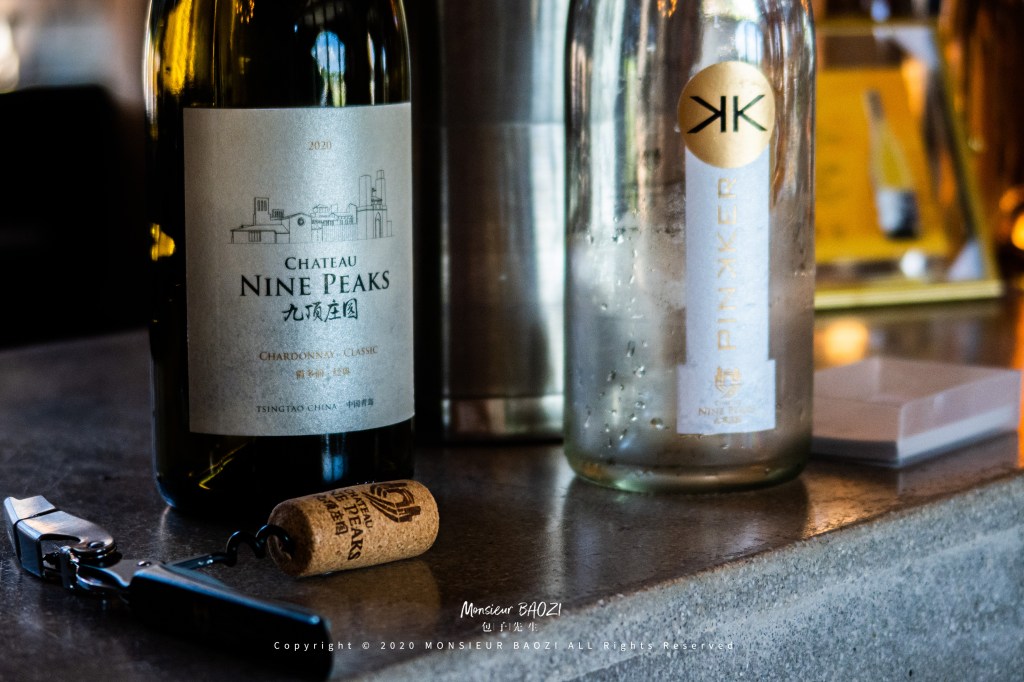
Grape varieties: Chardonnay
Price: ¥ 198 /bottle
This is the entry-level of the house’s three Chardonnay vintages.
The wine has not passed through the oak but has fermented “sur lie” (= natural sediment from the yeast), giving it that typical roundness and suppleness.
03/ Petit Maseng single grape collection 2019 – 精选小芒森甜白葡萄酒
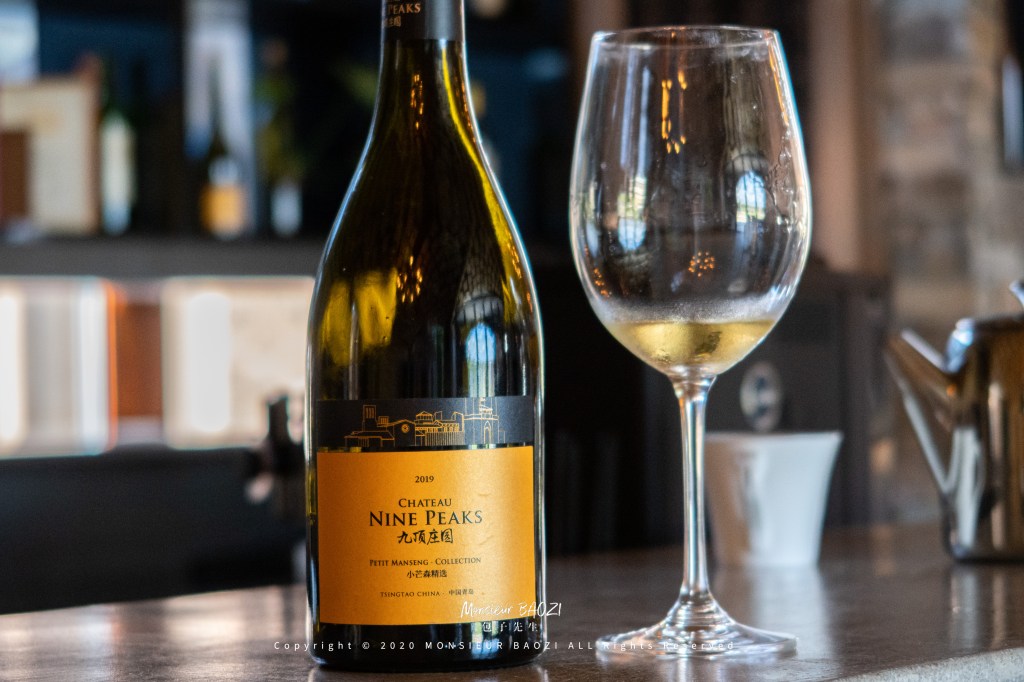
Grape varieties: Petit Maseng
Price: ¥ 388 / bottle
Petit Manseng and Gros Manseng are two white grape varieties from southwest of France, used to make a dry, fruity and nervous white as well as a fragrant semi-sweet.
This is the second choice for which the C9P wine-makers have gone, with this very well-balanced sweet wine: generous aromas of floral honey and ripe peach, a silky texture, and a little kick of freshness brought by subtle acidity.
04 / Reserve red 2018 – 九顶庄园珍藏赤霞珠红葡萄酒
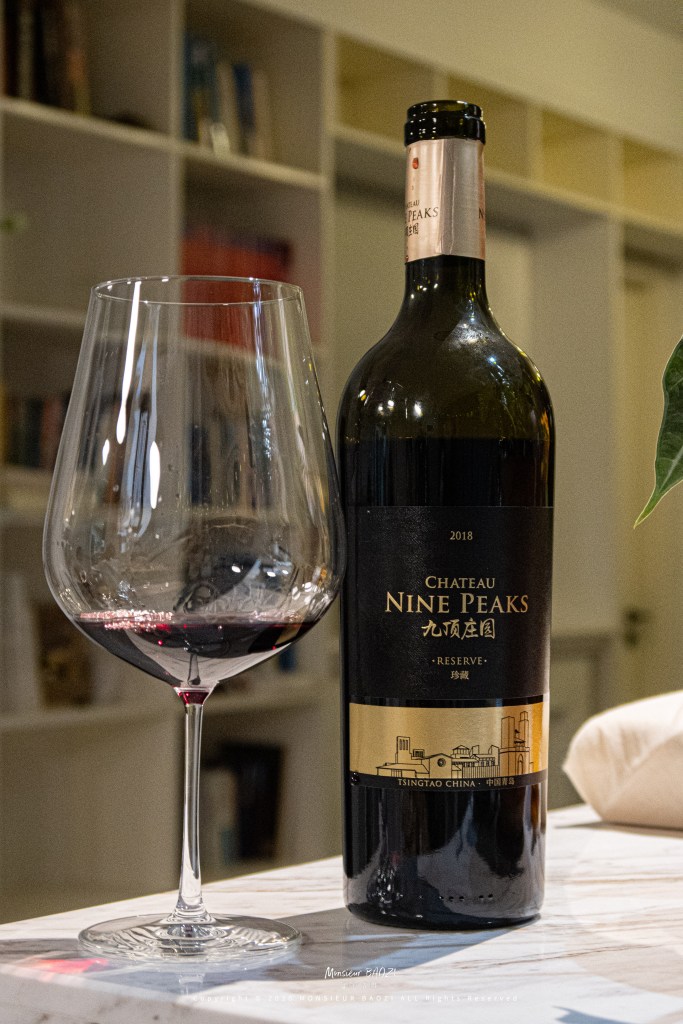
Grape varieties: Cabernet Sauvignon 56%, cabernet gernischt 19%, Merlot 21%, petit verdot 19%, Syrah 4%
Price: ¥ 336 / bottle
A clear purple robe, rather medium-body, well-integrated acidity, and a hint of pepper.
An elegant Bordeaux blend rounded up with some Syrah.
05 / Qi Chardonnay 2018 – 九顶庄园氣
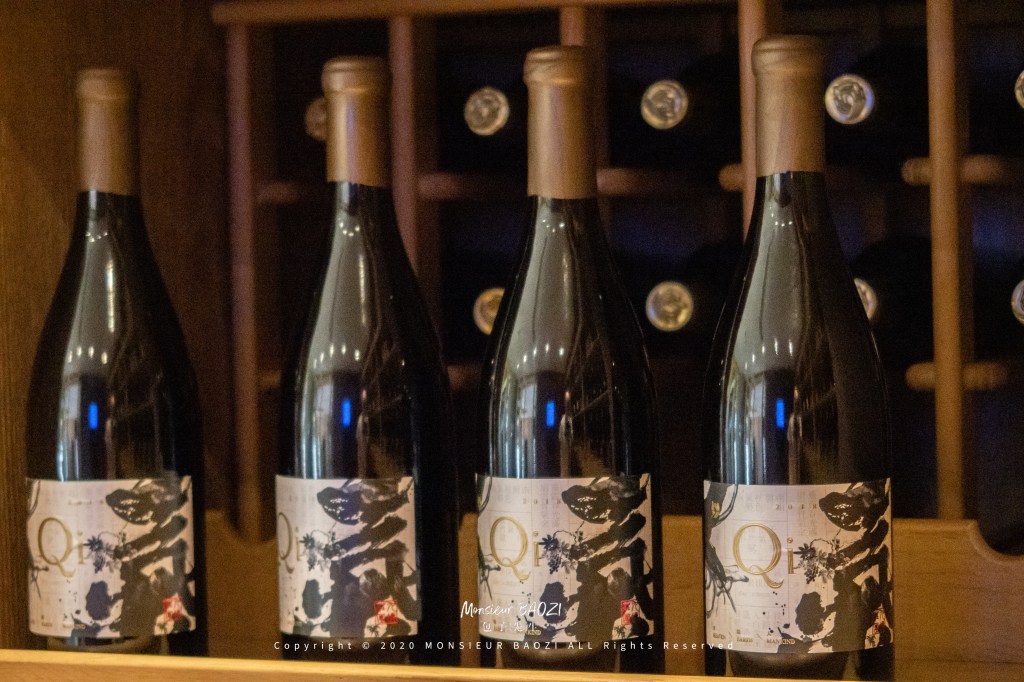
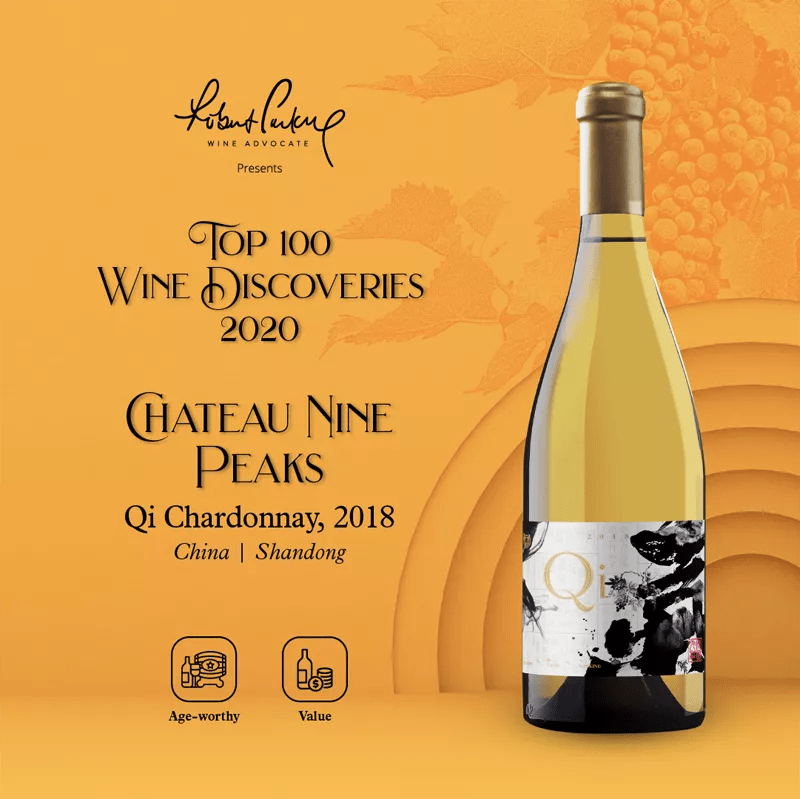
Grape varieties: Chardonnay
Price: ¥ 668 / bottle
Qi is the most premium cuvée from C9P, and it’s white (100% Chardonnay) is arguably the best Chinese white wine.
The winery will decide to produce this cuvée only the best years.
Since the winery creation (2008), only 4 vintages of Qi white have been produced: 2015, 2016, 2018 & 2019, with below 10.000 bottles each time.
I purchased a bottle of Qi, but haven’t opened it yet!
Conclusion
I expected a lot from C9P, and left happy and satisfied.
The winery stands out by its professionalism and rigor, brought by efficient management and a team of professionals.
Wine lovers can (and should) go to C9P: they won’t be disappointed.
 monsieur baozi