

We don’t talk about it that much, but Shandong province really deserves to be visited.
For its soothing countryside, for its food, for its relaxed and welcoming inhabitants, and… for its wines!
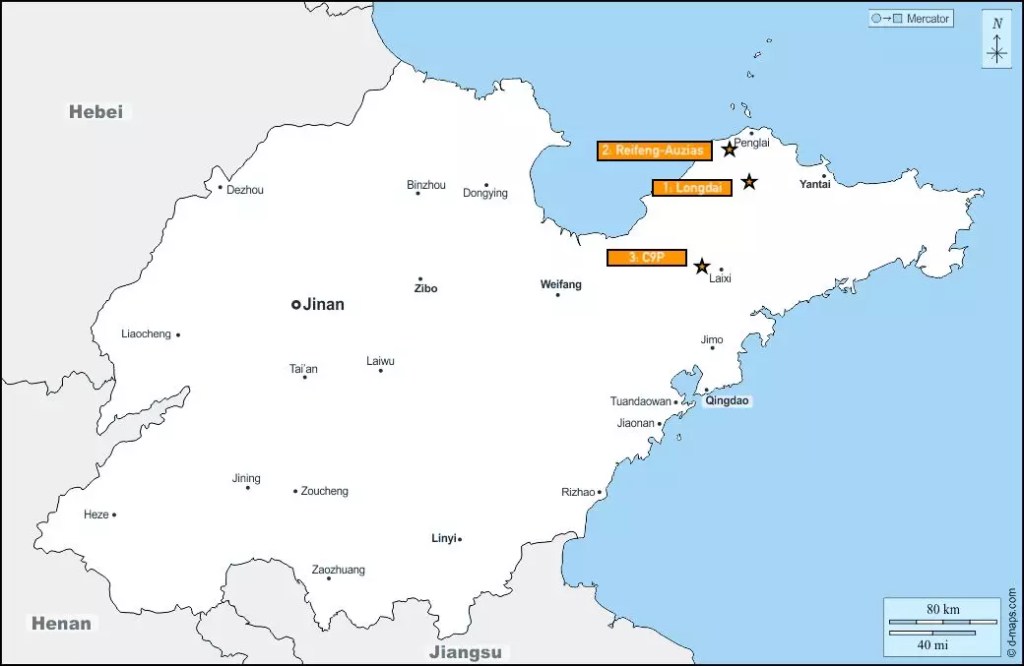
Having visited Ningxia last year during the harvest, I wanted to learn more about Shandong’s specificities: How climate, soil, and people affect the wine in China’s first wine region in the quantity of wine produced
We met up with a couple of friends at Yantai/Penglai Airport and started our journey with the notorious …
Domaine de Longdai – 瓏岱
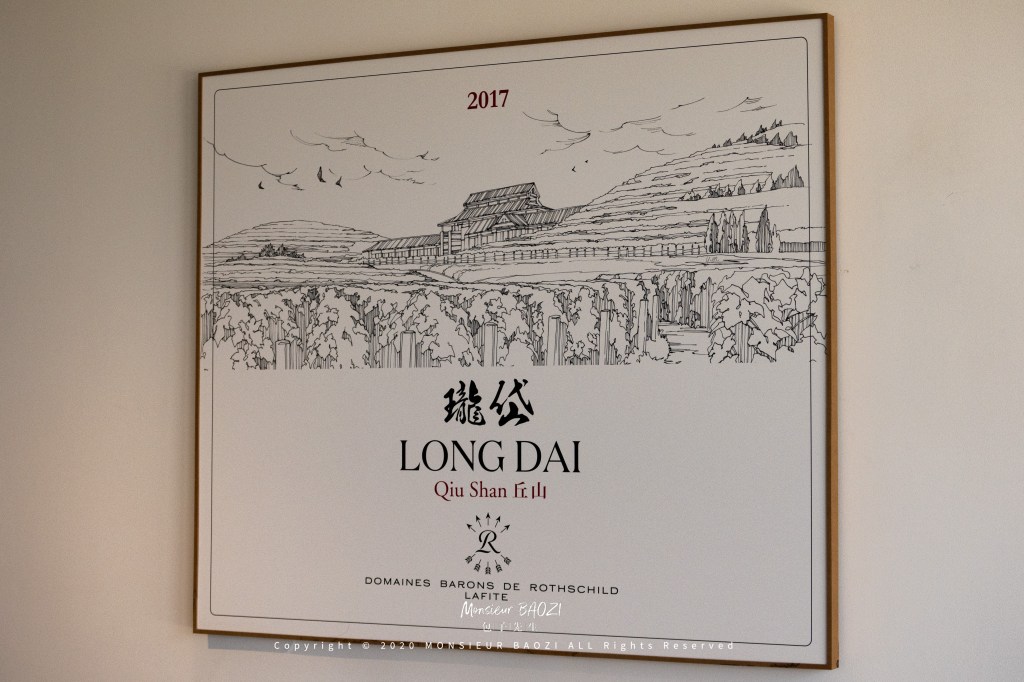
Domaines Barons de Rothschild Lafite
What to start with?
There is so much to say …
Domaine de Longdai is the result of a project spanning more than 10 years, 100% driven by the Rothschild family, known worldwide for its Bordeaux châteaux:
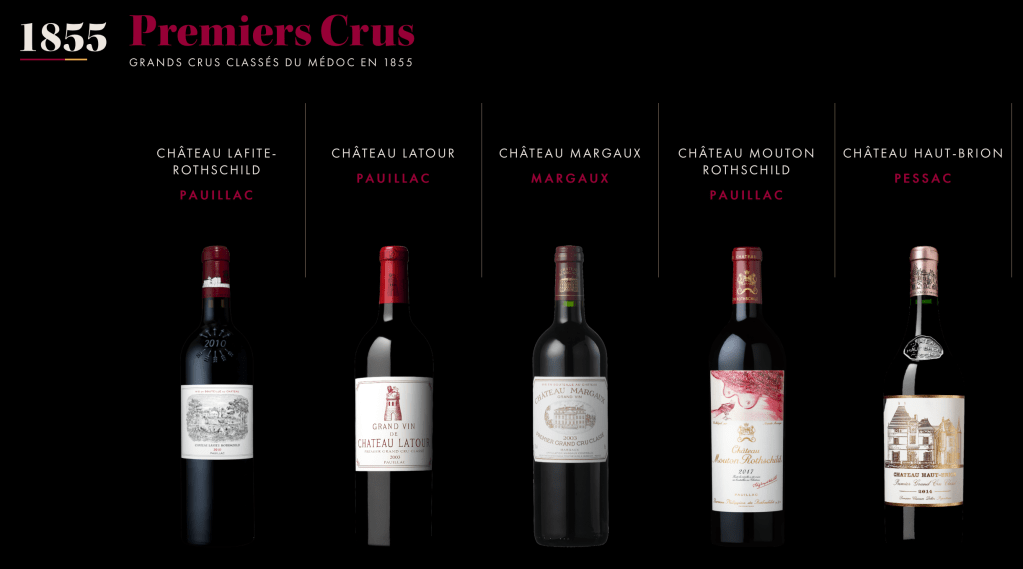
– Château Lafite Rothschild: 1er cru classé in Pauillac (Bordeaux)
– Château Mouton Rothschild: 1er cru classé in Pauillac
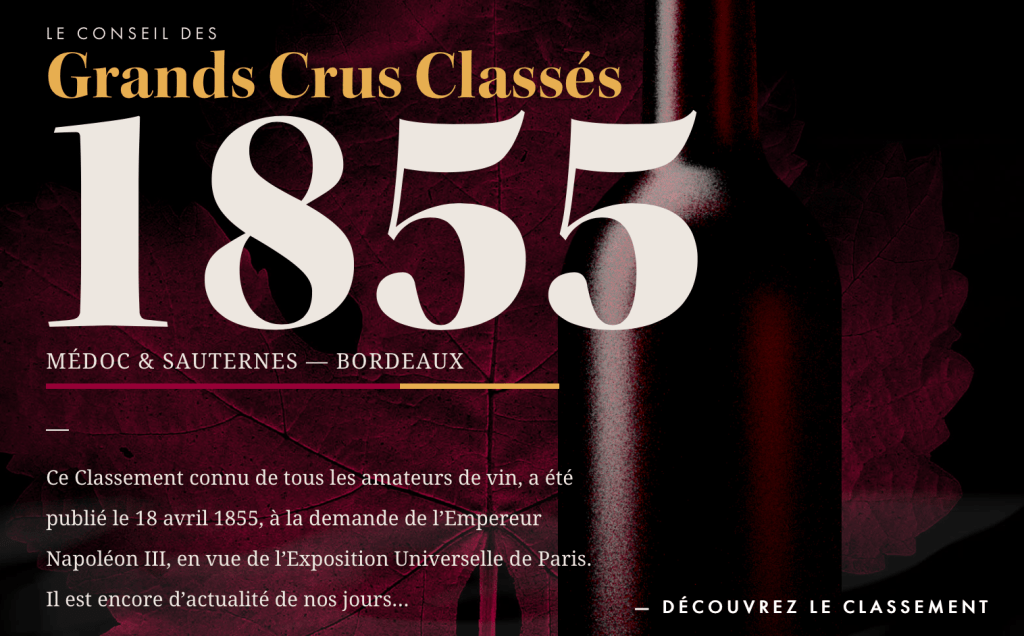
“Classé” means there is a classification.
This is not a simple classification: in 1855, Paris hosted the Exposition Universelle (world fair).
For the occasion, Napoleon Bonaparte asked french wine regions to rate their best wines.
The famous “1855 classification of Bordeaux Grands Crus” followed:
5 premier crus (1st)
14 second crus (2nd)
14 troisième crus
10 quatrième crus
18 cinquième crus
The winery
Longdai, located in Qiu Shan near Penglai is the Chinese estate of Chateau Lafite Rothschild.
With such a heritage, needless to say, that excellence, prestige, but also a touch of mystery made the journey from France to China.
The Visit
The Longdai Estate is 30 minutes drive from Yantai Airport, where we picked up our rental car (I definitely recommend renting a car if you are planning a winery tour there).
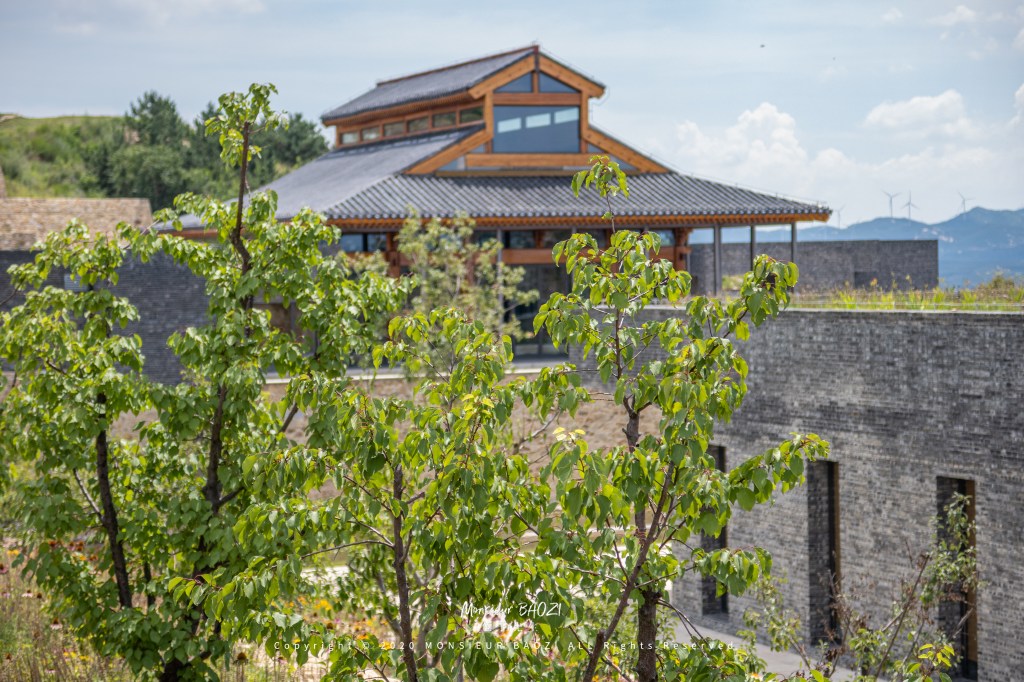
A few minutes before arrival, the shape of the magnificent building designed by the architect Pierre-Yves Graffe emerges in the middle of the vineyards.
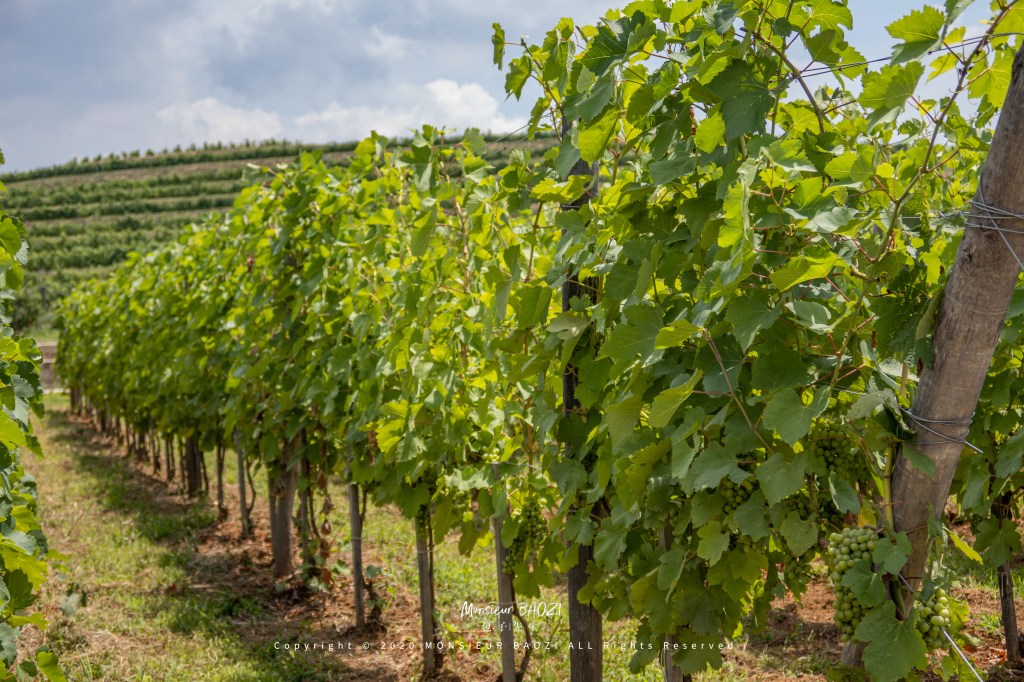
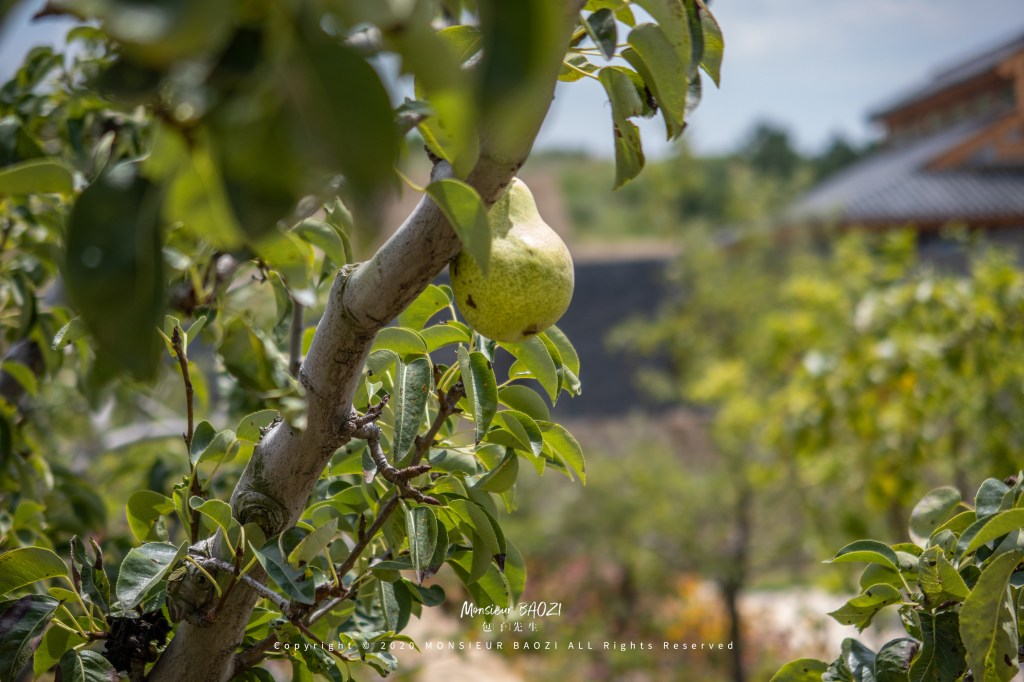
After going through security and checking our reservation (¥ 200 / person for the classic tour, ¥ 500 for the “VIP” tour): the explanations begin in the middle of the vineyard.
The staff in charge of our visit starts by explaining to us how the climatic conditions affected the last harvest and the 2020 vintage which is currently sleeping in the precious oak barrels of the estate.
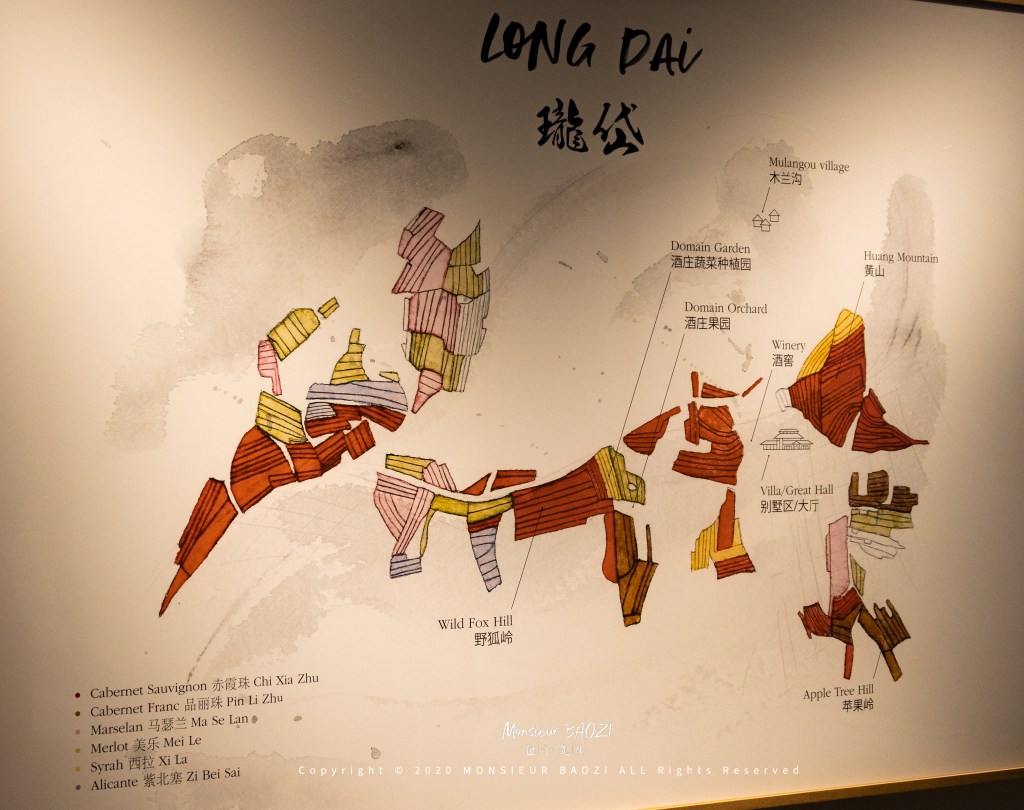
Cabernet sauvignon
Cabernet franc
Marselan
Merlot
Syrah
Alicante
While Cabernet Sauvignon, Marselan and Cabernet Franc are systematically part of the “Longdai blend”, not all of them are included in the composition of the two wines of the estate.
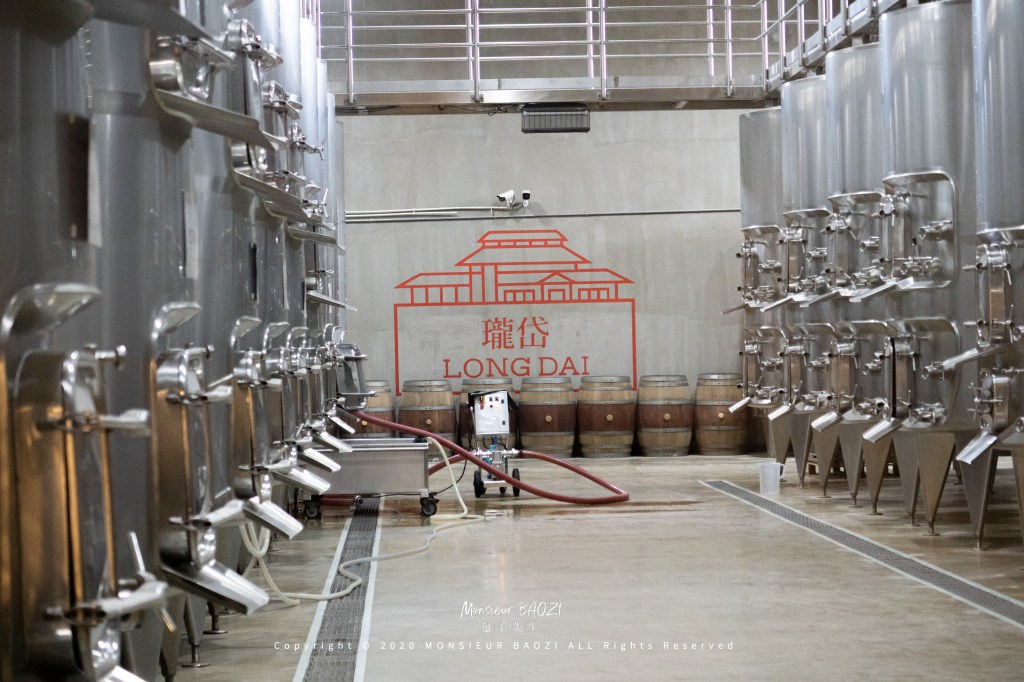
Once past the fields, we get to see the maceration vats (empty as the harvest won’t start before the end of August).
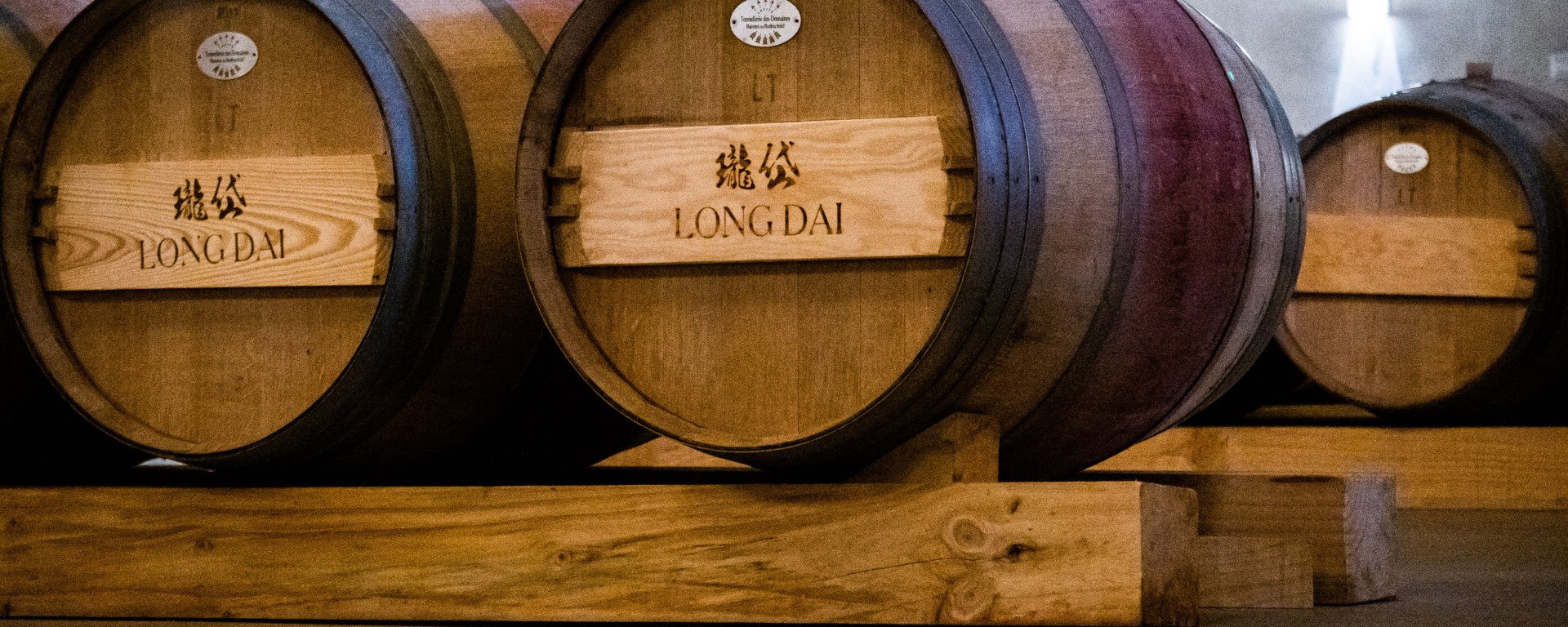
Then, one level lower, the ageing cellar and the oak barrels in which the precious 2020 vintage sleeps, which we will be able to taste in 2 years.
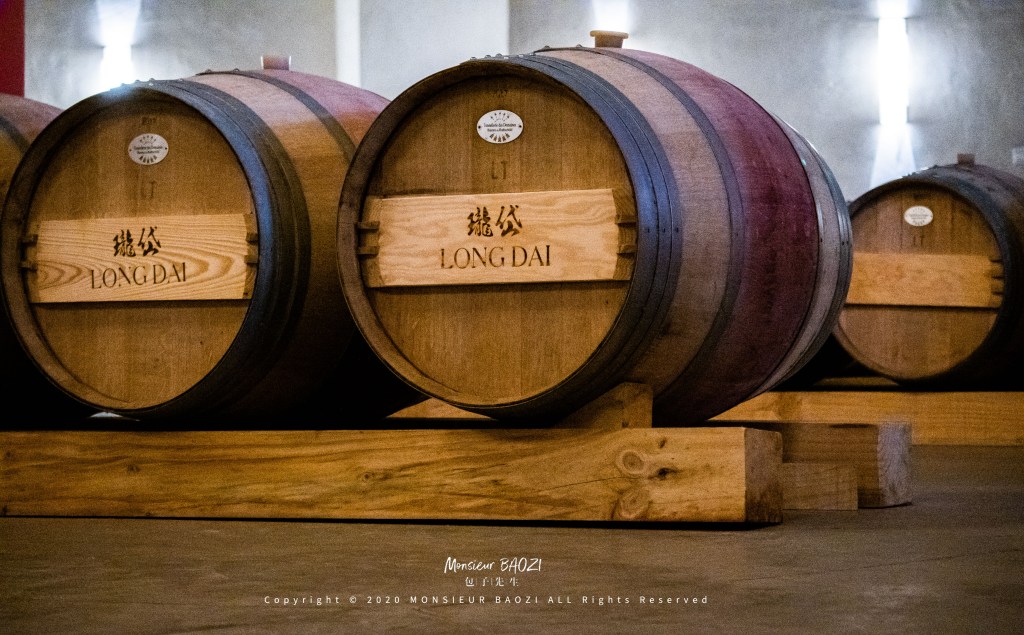
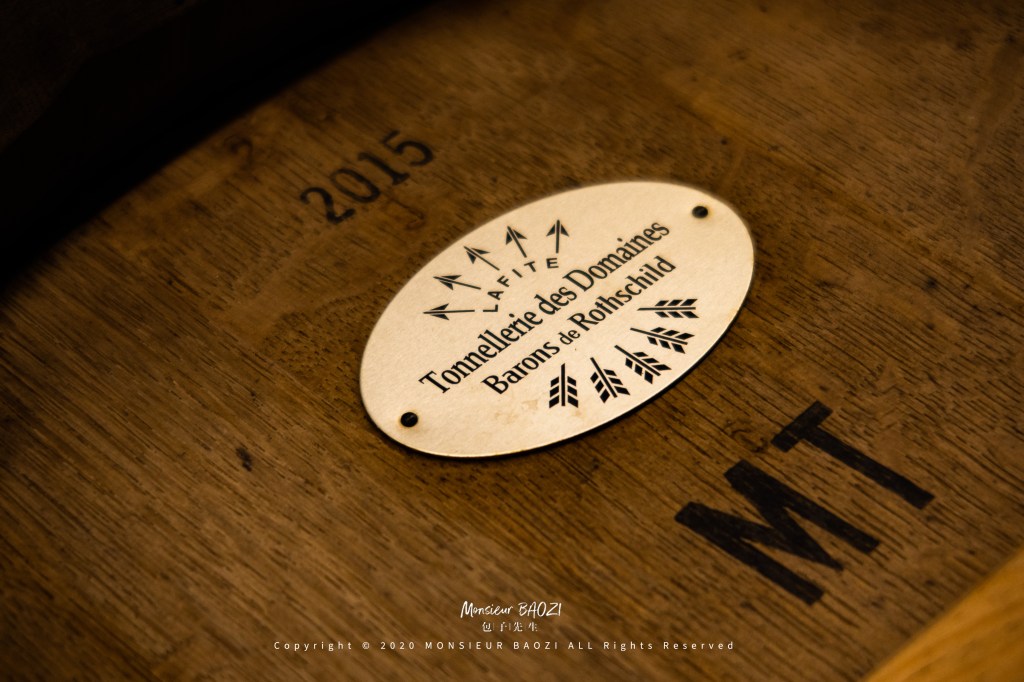
Here again, Longdai is not like the others: the Lafite Rothschild estate has its own Tonnellerie (cooperage) in Pauillac:
A team of 5 coopers who make 2000 French-oak barrels each year used in the various properties of the group.
Longdai is made using traditional Bordeaux winemaking methods, and bottling is done on-site, at the estate.
The tasting
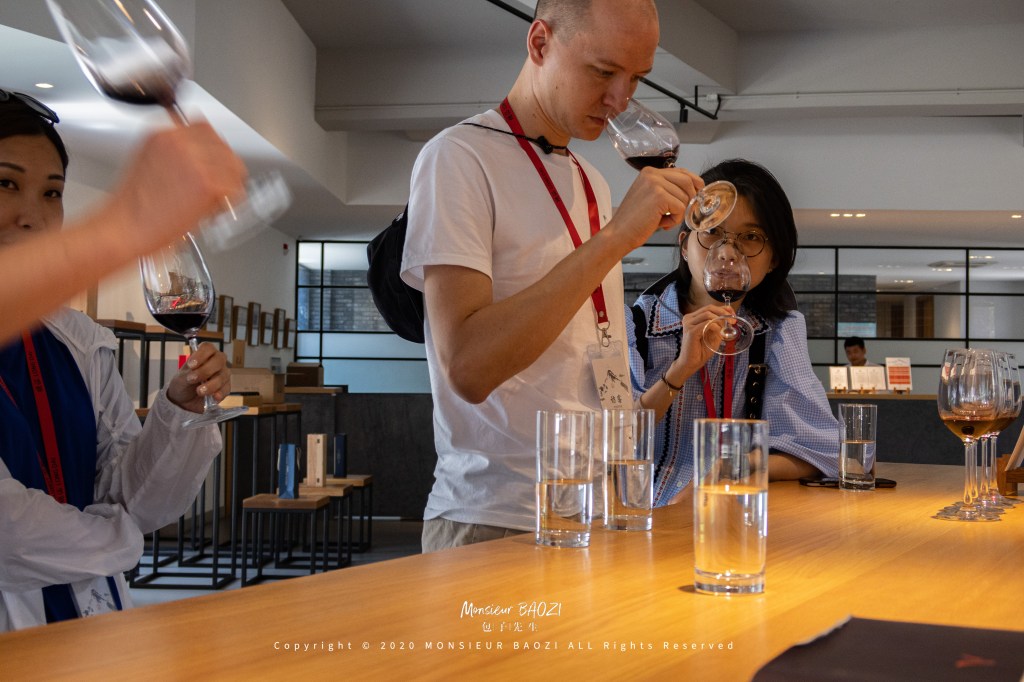
The visit includes the tasting of two wines
01/ 琥岳 Hu Yue 2019
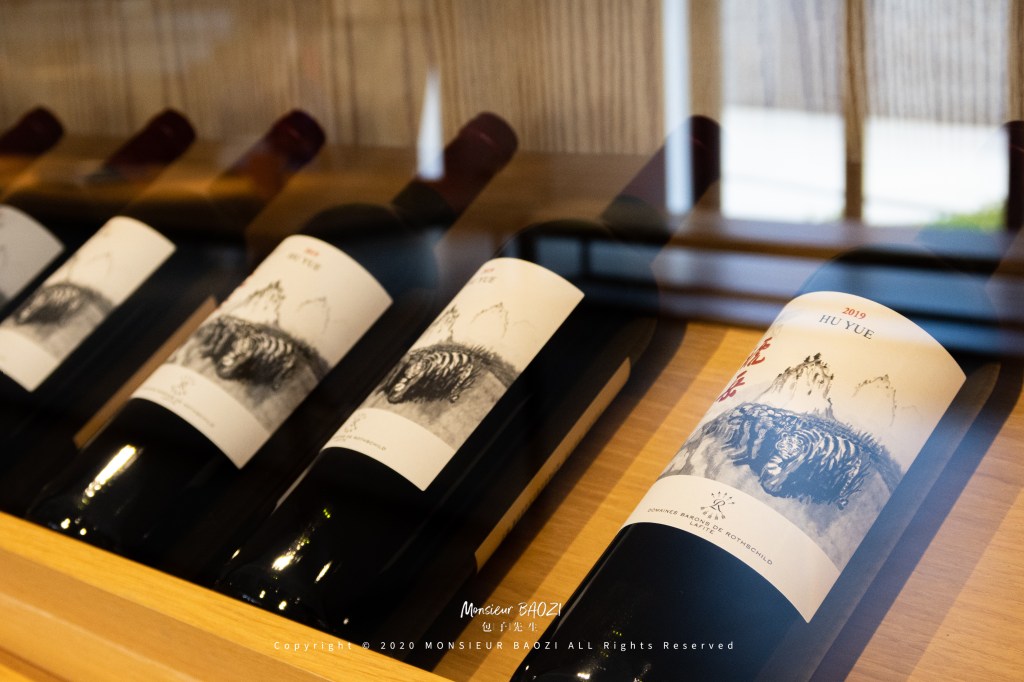
Grape varieties: Cabernet sauvignon 57%, Marselan 17%, Syrah 15%, Cabernet franc 11%
Price: ¥ 800 / bottle (at the estate)
This is the second wine of the estate, which unfortunately lacks at least two years of ageing to soften.
02/ 瓏岱 Longdai 2018
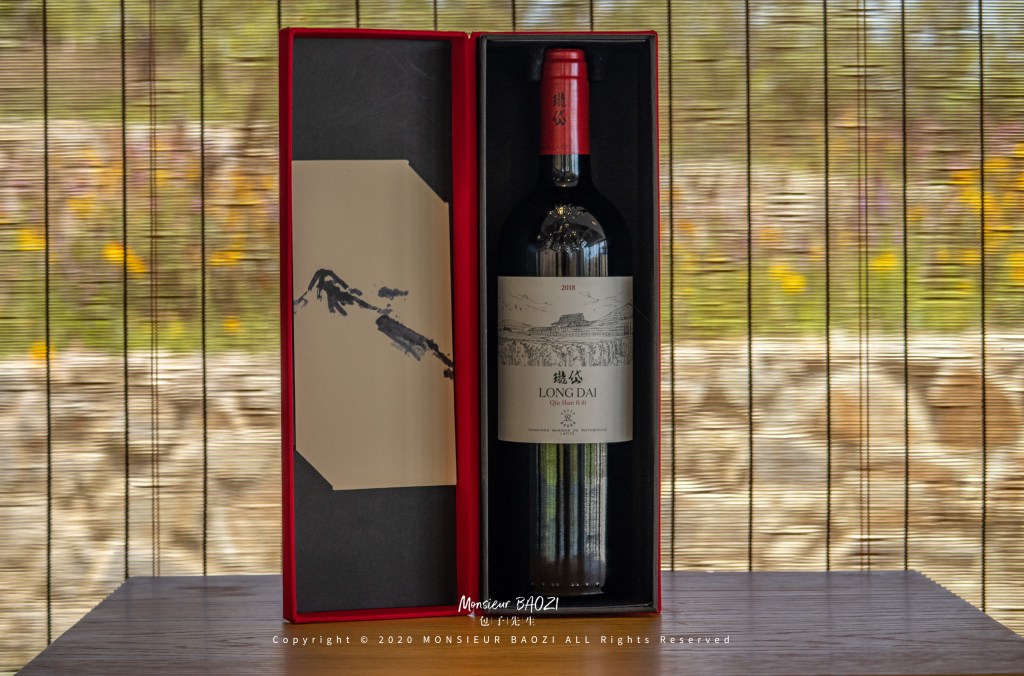
Price: ~ ¥ 2,500 / bottle
Grape varieties: Cabernet Sauvignon, Marselan, Cabernet Franc
On the nose, generous aromas of black fruits, ripe blueberries and blackcurrants. The texture is silky, voluptuous, and the robe deep purple.
In mouth, complexity and a lot of finesse, as well as the assertive tannins typical of Lafite wines.
A wine that surely has great ageing potential, which should be tasted again in 2023 to better appreciate it.
Longdai is part of the lineage of the family’s wines. Of course, excellence comes at a price, and Longdai makes no exception.
Is the price justified?
Even for China-made wine, I personally find the price high.
However, there is no doubt that Longdai contributes to putting “Made in China wines” on the fine wines world map.
When you drink a glass of Longdai, you benefit from 150 years of history, research, and experimentation from an emblematic family in the world history of winemaking.
How not to be sensitive to it?
After all, wine is (mainly) about emotions, and there is not so much “rational” about it…
When I think that the first vintage officially bottled was the 2017 vintage, I tell myself that it is really exciting to witness the first hours of an estate that, without a doubt, will become a reference in high-end made-in-China wines.
[To be continued]
 monsieur baozi
One thought on “The wines from Shandong province (part 1)”