

China is a country that has seen an extraordinary number of online businesses coming out, over the past few years. Few areas are spared, and the tragic consequences of the recent coronavirus have only exacerbated this increase.
Shopping online, in particular, is one of those things I’ve gotten used to living here. Armies of delivery drivers crisscross cities to transport things from point A to point B.
For my part, after 4 years of living in China, I still prefer to do my “pleasure” shopping in a physical store. But I can’t deny how convenient it is to be able to get groceries packed and delivered at my door when I want to.
1- Hema – 盒马

It is a chain of physical stores of the Alibaba group, with their own fleet of delivery drivers and their own application.
The brand is committed to delivering your groceries in less than 30 minutes, provided you are within a 3KM radius of one of their stores.
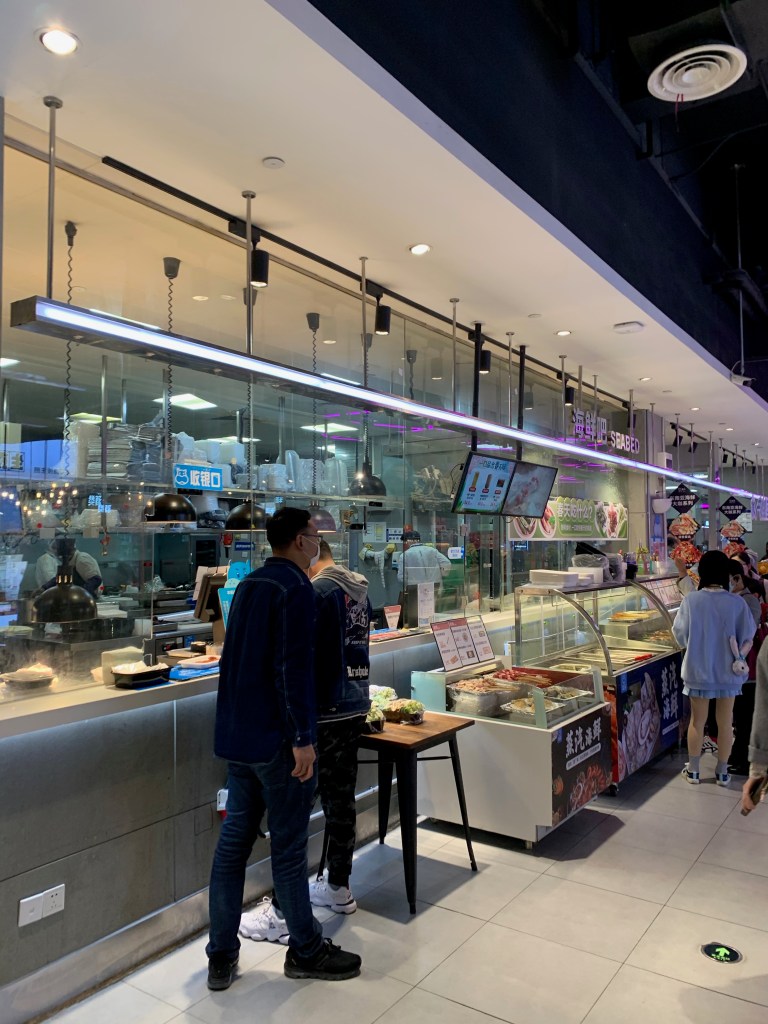
The brand is well known among locals for its live seafood offering: fish, shellfish, crabs, lobsters. Hema is also a large selection of imported wines and beers, bread, fairly good quality vegetables, local and imported meat and everything you would find in a Wallmart or Vanguard.
The app
To find the app, look for “Hema” or “盒马” in your AppStore
An Alipay account (Alibaba payment solution) is essential to order and be delivered, as well as to pay in-store. At Hema: no cash, no CB, no WeChat pay.
You can also choose to shop at one of the physical stores, especially if you are out of the delivery perimeter. But either way (delivery or on-site shopping) you will need the App to purchase.
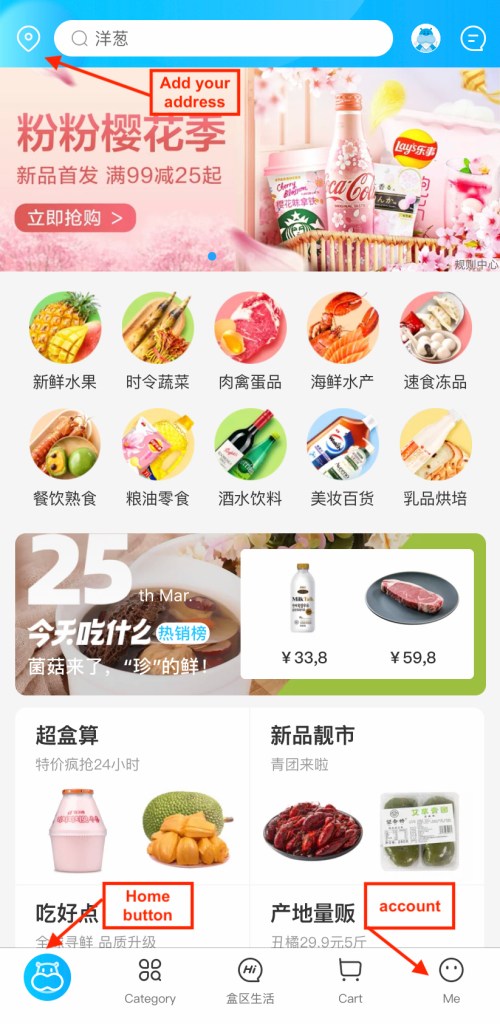
Ordering
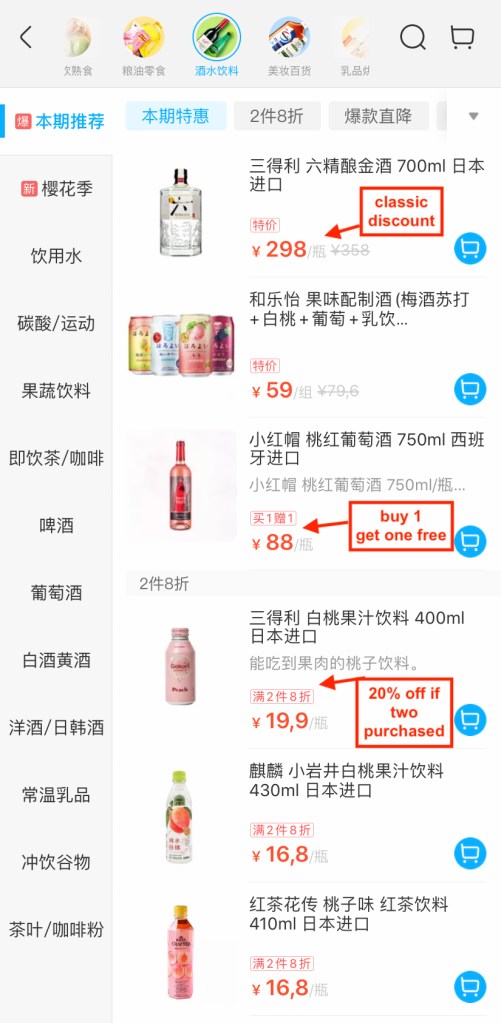
The ordering is quite intuitive at Hema. The app highlights discounted products, and products are categorized. fill your shopping cart as you see fit. Recently, the brand has limited to 1 free delivery per day per user. This limitation is time-reduced to the coronavirus in order to encourage people not to move.
No minimum amount however, you can get an onion delivered if you wish to.
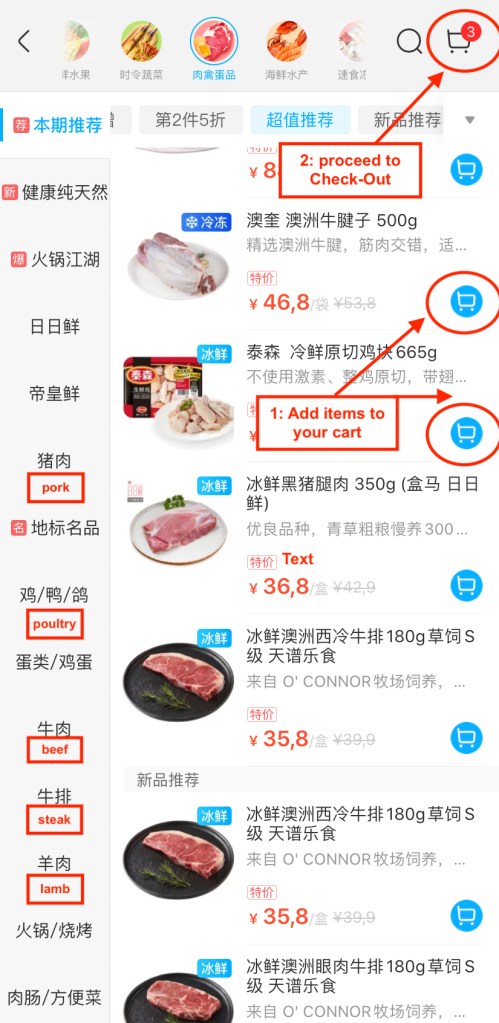
Payment – delivery
Once paid, the shop will offer you a time slot for delivery which is particularly convenient. Technically, you can even schedule delivery the day before for the next morning at breakfast for example.
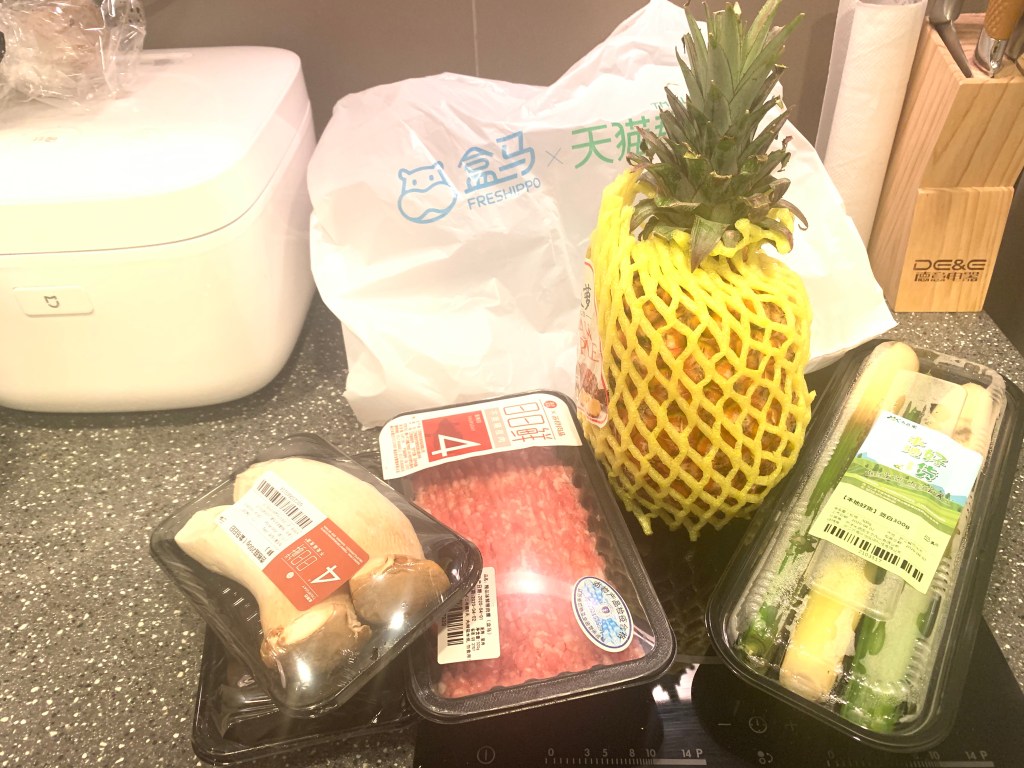
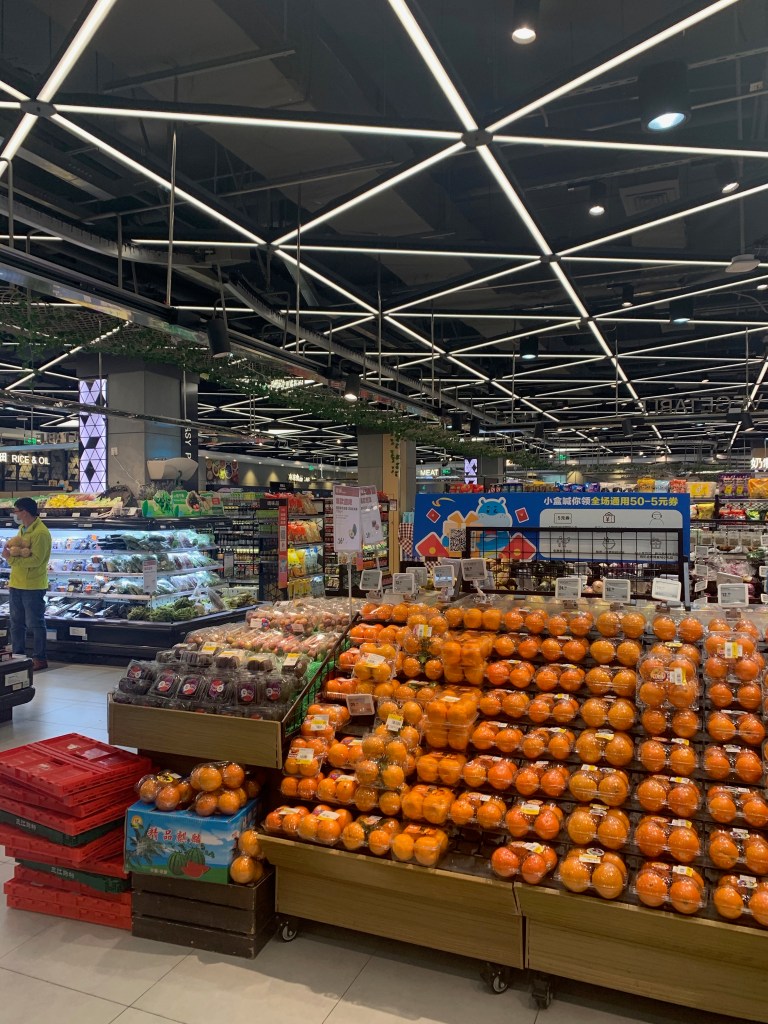
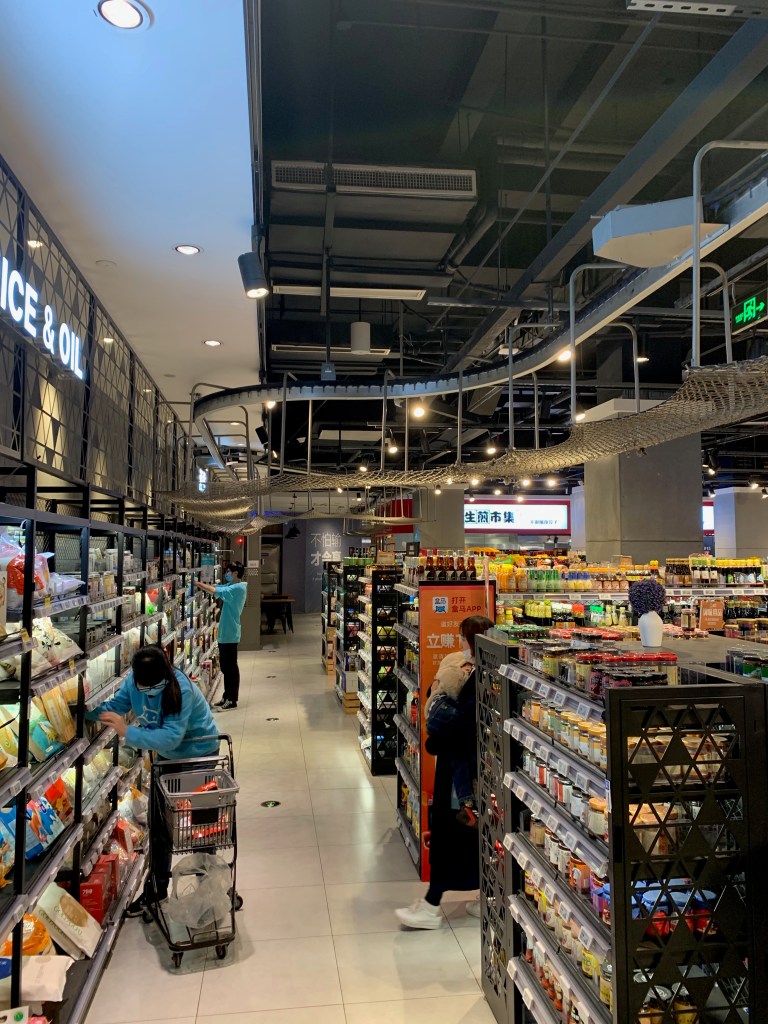
To give you an idea, here are some references in the store:
Fresh Tofu 420Gr: 6rmb
1 pineapple: 12-26RMB
pork meat 300G: 30rmb
Australian Sirloin beef steak 200G: 50rmb
imported wine bottle: 80-600rmb
By forcing its customers to buy through the app, Hema makes Big Data the backbone of its strategy. You will be suggested products that correspond 80% to your desires, substantially reducing food waste pretends the brand.
In a few years (launched in 2016), Hema successfully implanted into Chinese habits while combining unique shopping place, performant logistic organization and a wide selection of products, always fresh (as the brand’s name indicates: 鲜 = fresh).
If you take close attention to the pictures above, you can see on the ceiling a system of
we can see on the ceiling a system of rails through which pass the basket containing orders that are being prepared and will be delivered soon.
Ding Dong Mai Cai – 叮咚买菜
If Hema is well known now, it is less the case of 叮咚买菜. The shop’s App looks a lot like Hema: Many of the products are similar, the ordering and delivery mode are identical. The fact that the brand chose to be online-only gives it more agility and can cover a wider area while implementing more warehouse inside cities. In my city, there is around 10 Ding Dong Mai Cai, vs 2 Hema. It allows the brand to be substantially cheaper as well, as they reduce their cost (no off-line shop) and (hopefully) waste.
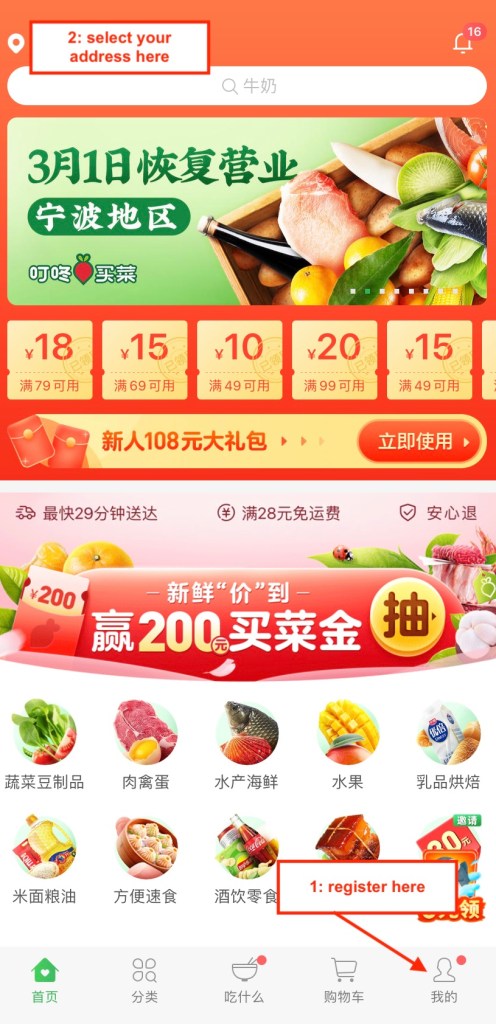
Differences?
☛ Prices are a little lower on various references and products, especially veggies.
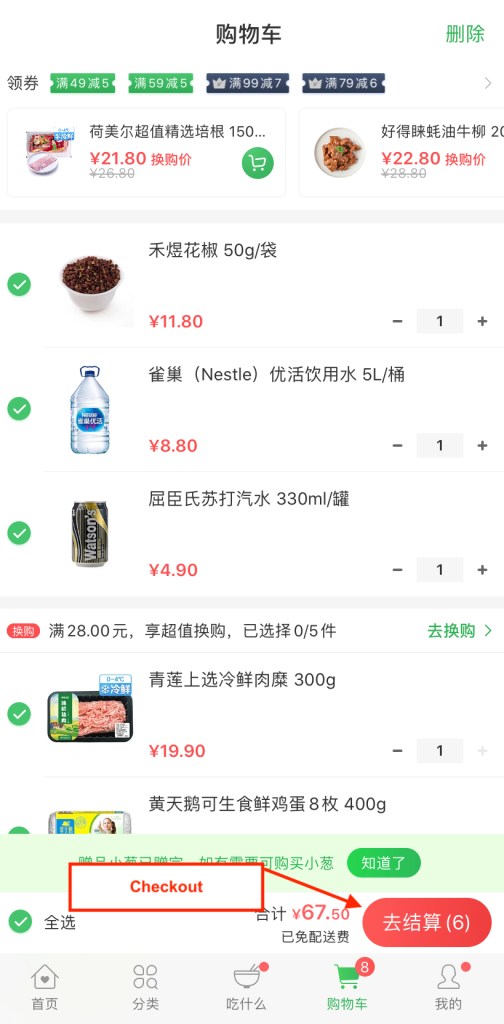
☛ The app defines itself as an online traditional neighbourhood market. For example, when checking out, the user can choose a bunch of spring onions offered (just as a vegetable merchant would do at the market). It may seem like a detail but it matters to many people.
☛ It is mainly food and beverages oriented
☛ The choice of wines and spirits is much less important
☛ The app commits to deliver in less than 29 minutes, free of charge if your bill exceeds 29RMB
☛ It is online only, you can shop on-site
Online groceries is made so simple in China that I use it almost everyday, and would certainly have difficulties to live without now. I am also watching closely evolution of the country’s improvement on plastic consumption and waste, trying myself to minimise as much as possible my impact on the environment.
 monsieur baozi
One thought on “My life in China as a foreigner: Online groceries”