

[Reminder]
This is the second episode of a series I will frequently update, in order to share my ongoing experience and try to answer some of these questions:What is a Tier 2 city and how is it to live in one of them? Answered hereHow is it like to live in China as a foreigner / a French citizen? Answered here
Does China still have the power to make you rich? Has she ever had it?
Is the language/culture barrier difficult?
Is there a big difference between Shanghai, Beijing, and the rest of China? What about Hong Kong?
What is my daily/weekly/monthly routine: what I eat, do I miss French food, what are my favourite Chinese food, etc…
When I was still living in France, I had an image of China distorted by the information that came to me: pollution, unbridled growth, lack of freedoms, or even more recently the new system of social scoring and the ferocious appetite of China through, for example, the ‘New Silk Roads’ project.
Moreover, the image that the Chinese give in the world today is often summed up in the following profile: People with a high purchasing power, not very careful, even naïve, and very, very fond of any kind of consumption.
In addition to this, we tend to hear more and more often:
The biggest company of whatever: it is frequently a Chinese one
The biggest market in any sector: It is usually China
The highest average spend/customer in any field: Usually a Chinese profile as well
From there to think that the country can make you rich there is only one step, right?
Well, this might disappoint some people (or reassure them?): life in China is much more “normal” than it looks.
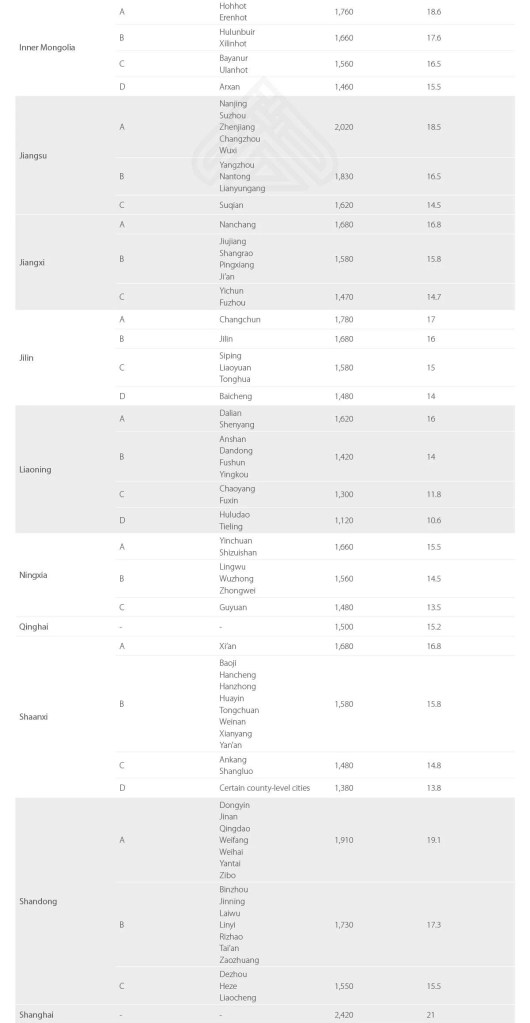
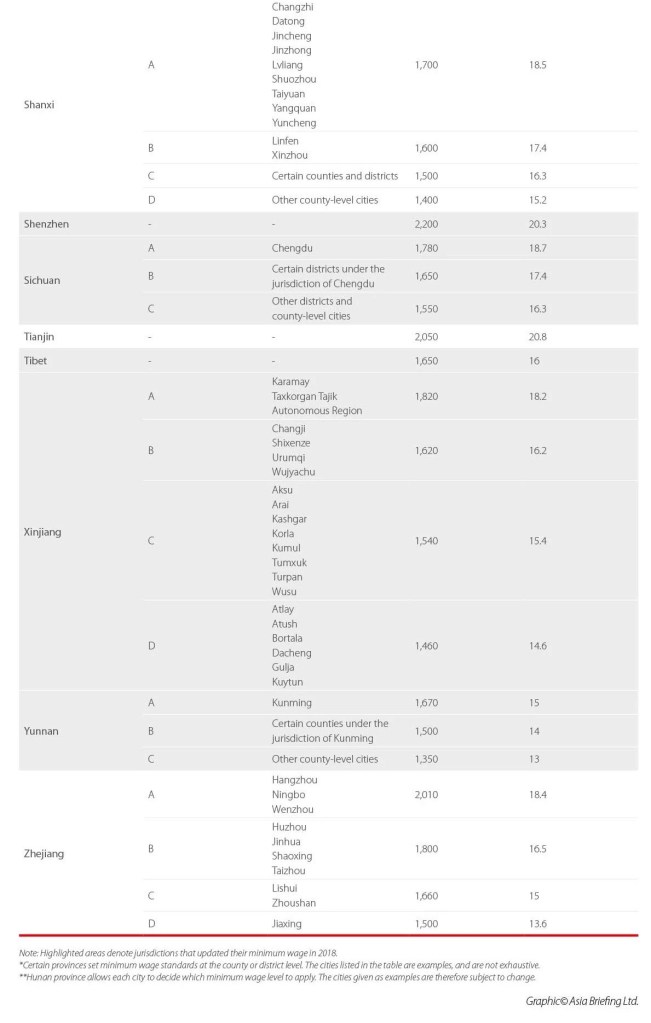
Money and wages: in the city where I live, the minimum salary is 2010RMB per month (it’s legal and factual), which is about 260Euros. Few people, however, get that salary and I would say the average is somewhere between 5000 and 7000RMB per month.
A teacher earns between 7000 and 15,000 RMB depending on his level of education, his specialization and his school/faculty.
A waiter/cook receives between 3000 and 6000 RMB, a taxi driver between 6000 and 10,000.
In terms of major expenses, rent in cities of my rank as well as in larger cities can be very disparate. You can accommodate yourself for very cheap (I saw rooms for less than 1000 RMB per month, which is around 130 Euros) in accommodation of very, very poor quality. On the other hand, staying with your family in Ningbo in a residence not too trashy, will cost you between 6000 and 10,000 per month, or more for high-end residences.
But here is one thing you should know: if you have recognized skills and knowledge in any field, there is a good chance that China is interested to acquire that talent/knowledge. Under this condition, it is possible that China will become an Eldorado for you. Large companies, especially industrial ones, have very large budgets to acquire the knowledge that is lacking in China in many sectors. So I know experts in several fields (automotive, pharmaceutical, …) for whom life is nothing like what I have just mentioned, with monthly salaries of more than RMB100,000, a driver, allowances, bonuses, etc.
Last, I am talking about my experience. China is large, disparities between cities are significant. You can completely meet an English teacher who earns 35,000rmb/month, or a tech company executive in Shenzhen earning 2 times that salary, or even 3 times. I am talking about my experience, and I am trying to express generality.
About Business: I have started three companies since I arrived in China. So I’ve been dealing with businessmen and women, and I have a clearer idea of the business environment in China. Here are some points that I noticed, throughout my experiences:
- The myth of “the Chinese investor who sprinkles cash“: I hear sometimes that Chinese fortunes cannot get their money out of China easily, and therefore invest almost blindly in any mainland project that comes to them. I would say that this myth is partly true and partly false. First, a rich Chinese is also very often smart (like everywhere in the world). As for taking his cash out of the country, he still has some options available but it is true that the barrier of culture and language prevents many to invest outside China. But I also have to admit that many of the wealthy Chinese I encounter are impulsive and tend to trigger with elements of details and not always structural. Your relationship and the image you reflect, as a project-holder but also in your daily life, are very important.
- Beware of the trap of the omitted shareholders’ pact: morality, mutual respect, common sense, are values that have different meanings in China. While it can be relatively easy to raise funds in China, it is also easy to end up with novice investors, that can literally obstruct your work and ask you every day when they will get their money back instead of supporting you.
- Common truth: MOST of the investor and business angels I met are in a rush, expect a high return on investment rate in a very short amount of time. Money in China is sacred and precious, people do not sit peacefully waiting for better days. The pressure they can put on you can be difficult to manage.
- The myth of “the 1 euro product sold to half the population that will make you earn 500 million” (seen and heard): China is a real land of opportunity, but as anywhere else, a market study, a good business plan, investors who trust you and a great team are elements necessary for your success. Do not ignore cultural differences: they are much deeper than what it seems. You don’t sell wine to a Chinese the same way you sell wine to a French, the same goes for everything else: from a bread loaf to a Louis Vuitton bag. Making a product popular throughout the country does not happen by chance but by the result of a well-established marketing strategy that includes massive communication and a strong presence on social networks.
In conclusion, I would say that China was clearly an Eldorado in the years 1995-2010. Empires have been built on seemingly endless growth demand and a lack of players in hundreds of sectors.
Today, although I am not an economic expert at all, I see that margins are decreasing, competition is expanding, all combined with internal threats such as the Coronavirus epidemic that we have not finished to deal with, and especially external threats: trade wars, declining global consumption.
China, however, remains a great playground for testing ideas and initiate a business. Opening a company is fast and cheap, the economy is rather healthy, the country is safe and internal consumption supported by a continuously growing middle class, eager to learn, experiment, travel and live experiences.
I have a personal impression that the country is moving towards normalization: less corruption, more rights/protection for individuals. We must anticipate the changes in functioning that are sometimes extremely rapid, be agile in order to succeed in a country that is not always easy, but which never ceases to be fascinating.
 monsieur baozi
One thought on “2-My life in China as a foreigner: Can you still succeed in China?”