
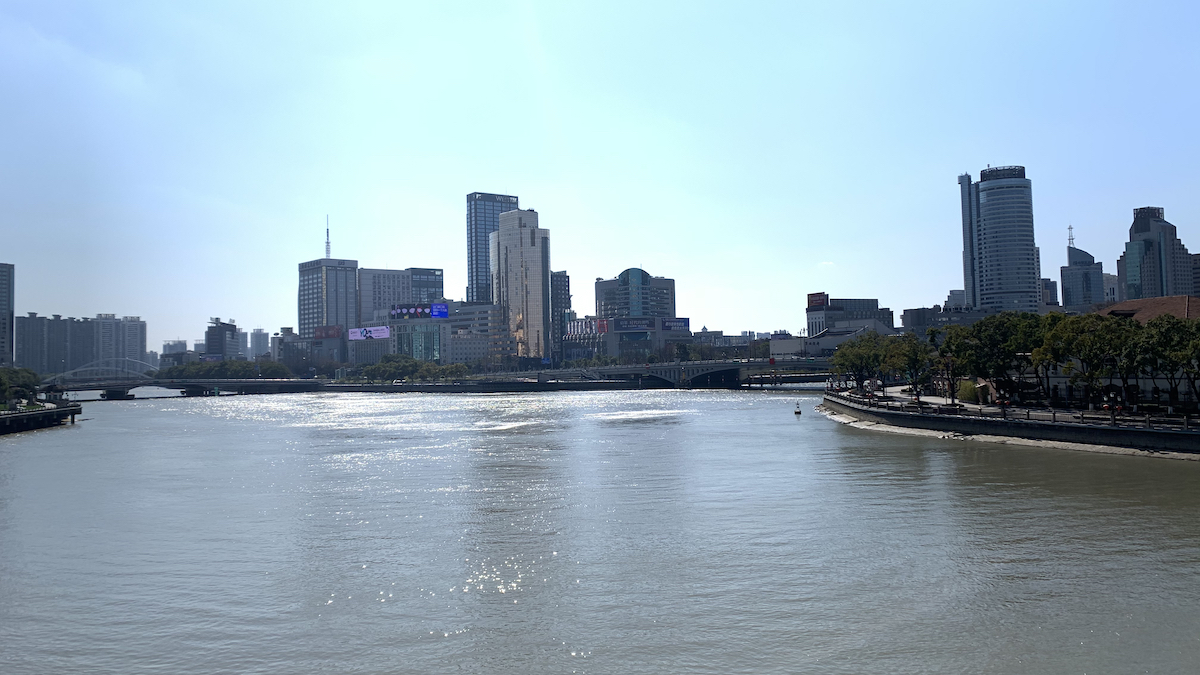
Hi, my name is Arthur and I have been living in China for 3+ years, in an 8 Million habitants city, 2H south of Shanghai.
First, it is important to say that I love my life in this country, and never regretted a single time to settle here. To share my own experience, and help people curious to know more about how it is to live here, this is the first episode of a series I will frequently update, in order to share my ongoing experience and try to answer some of these questions:
What is a Tier 2 city and how is it to live in one of them?
How is it like to live in China as a foreigner / a French citizen?
Is China still a good place to make money? Has it ever been?
Is the language/culture barrier difficult?
Is there a big difference between Shanghai, Beijing, and the rest of China? What about Hong Kong?
What is my daily/weekly/monthly routine: what I eat, do I miss French food, what are my favourite Chinese food, etc…
To put a little context, I came to China for the first time in 2013, to visit a friend who was starting a Tech job in Shanghai. I already knew Southeast Asia quite well, but what I found in China had nothing to do with everything I had seen before. Somehow, I turned out to like the city, or at least the very small idea I had about it was positive: dynamic, “many things to do” impression, I also liked the way foreigner I met were living their life.
After another trip for the same reason in 2015, I finally moved in late 2016 with my wife, who happens to be a Chinese lady whom I met in France at university.
We decided to come to China one year after graduating, for several reasons. For my part, I was already working in an Audit firm and this expatriation was the perfect opportunity to do what I had in mind for a while without really succeeding in triggering it: taking the step of entrepreneurship.
At that time:
I didn’t speak a single word of Chinese beside “ni hao” and “xie xie”
I only knew two cities: Shanghai and Hangzhou, with a total time spent of 20 days as a tourist
I knew basically one guy in the whole country, and that guy was living in Shanghai
But I was very positive about all this (and I still am), and I had (and still have) a fantastic Chinese wife which has been strong support.
Question 1: What is a Tier 2 city and how is it to live in one of them?
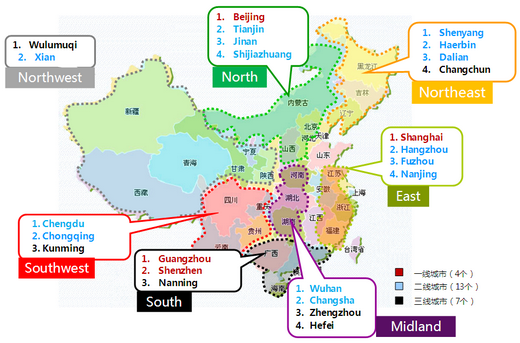
Chinese cities tier system: Chinese cities have a hierarchy, and are classified according to some criteria among which: average income, consumer behaviour, population size, consumer sophistication, infrastructure, …. Shanghai Beijing Shenzen and Guangzhou are the four historic cities forming Tier 1. Recently, a list came out with 15 “new Tier 1”, to which belongs the city where I live (Ningbo).
This new list reflects the incredible growth over the past 15 years of some cities that are much less known internationally. However, I personally find that daily life in Shanghai and Beijing has pretty much nothing in common with the rest of the country, so I continue to consider my city and the other 14 “new Tier 1 cities” as ambitious and particularly dynamic Tier 2.
Good or bad choice then?
It’s still a little early to say, but I can distinguish a few outlines:
There are more opportunities in smaller cities: not really. Shanghai is a particularly dynamic city, so is Ningbo. The amount of opportunities depends, much like everywhere else, on your network.
The competition is less fierce: yes, definitely. As around the world, talented people are attracted by cores of excellence: mainly big cities, or special areas (e.g. silicon valley for the tech industry). Important brands and services also follow these places. Tier 2 Cities in China are not particularly attractive towns, so there is less fierce competition in all sectors.
Life there, in general, is less “western-compatible”: yes completely. It’s not completely lost either, but there really is a fairly large gap between Shanghai and Beijing and the rest of China when it comes to restaurant offers, shopping etc.
Life is less expensive: Rather yes, but it’s not that blatant either. Let’s say that the high-end offer in restaurants, for example, is much less abundant, but for commodities, the rates are more or less the same, has the exemption of housing that is uncommon in the cities of Beijing and Shanghai.
Economic growth is and will be more supported by consumption in Tier 2 and Tier 3: Definitely, and that is part of the beauty of living here. There are still many things to settle and to improve, which allow me to “experiment” things and take part in the action. Many brands are focusing on these cities as the bigger ones are already well supplied.
However, these are the major specificities of my daily environment but they are not the ones who shape my days. The main differences are made in small details that, put with each other, make life particularly different.
Among these details, could be highlighted
English is less used / Mandarin more important to strive
Habits and mores are more “Chinese”: It is not pejorative, just a fact. People get up much more early, get lunch at 11:30 (sometimes even 11:00), and the dinner peak time is around 18:00. I personally got used to it, but when friends or family visit us, it is sometimes difficult to find a restaurant that still serves after 21:00.
Much more noise pollution: Recently, a taxi driver told me that honking in Shanghai is punishable by a fine of 200RMB. In Ningbo, usage of a horn is not regulated and then over-exploited.
Food and entertainment quality gap: restaurants, supermarkets, bars. We find all this where I live, but the quality of the offer is much, much below big cities. Even on Chinese food, and I’m going to frustrate some people for saying this: the offer in the big cities is better than in the smaller ones.
Courtesy absence: In transports, in a waiting queue, in a restaurant, basically everywhere, most of the people don’t pay attention to their surroundings and it does impact a lot your daily life.
Tons of other examples could be taken such as quality of service, quality of infrastructure, education, and many more. But it should also be said that during the last three years, I have noticed an improvement and I strongly believe in the willing of the authorities to improve life quality for everyone.
And of course, I could not finish this first series, with forgetting the POSITIVE aspects of living in a Tier 2 city in China, such as:
A less superficial life: I love Shanghai so much, but I can’t stop saying, every time I go there, how “not real” the life looks like in Xintiandi or Jing’an, compare to the rest of the country. I am persuaded that even Chinese tourist visiting Shanghai for the first time must feel like in another country. Simple, authentic life in China also has its beauty, provided you make the effort, not always easy, to take it upon yourself to try to understand this culture so rich, so deep, and so un-similar to the rest of the world.
Less crowded and smaller: and when you go to Shanghai Hongqiao train station, you feel the difference, believe me. Going from my place to Ningbo airport takes me only 20 minutes. That airport has only 2 small terminals and connects me to all China and most of the countries around. I barely queue for going into a restaurant (except for some popular Chinese ones on weekends).
Life is more chilled: Unfortunately…No. Life is speed and busy everywhere I have been in China!
That’s it for the first article about my life in China. Thank you for reading it until the end, feel free to give me some feedbacks (a comment or a mail or whatever you prefer). It will help me adjusting the upcoming post 🙂
 monsieur baozi
2 thoughts on “1-My life in China as a foreigner: Living in an 8M habitants 2nd Tier city”